- Haeckel, Ernst Heinrich
- (1834-1919)
Ernst Haeckel
- professor at Jena
- wrote The Riddle of the Universe
- Positivist
- Naturalist
- evolutionist
- Haering, Theodor
- (1848-1928)
- professor at Zurich, Gottingen, Tübingen
- Rischlian
- wrote
- The Christian Faith
- The Ethics of the Christian Life.
- Haldeman, Isaac M.
- (1845-1933)
- US Baptist pastor in one church in NY for 50 years
- fundamental leader
- premillennialist
- prophecy preacher
- Hall, John
- (1829-1899)
- US Presbyterian preacher who did not use a manuscript
- Calvinist
- Hamilton, William
- (1924-____)
- Death of God theology
- Associate of Thomas Altizer
- HARD DETERMINISM
-
- Also called Metaphysical Determinism or Supralapsarianism.
- Causality is a necessary or a priori truth about the world
- nothing happens for which there is no sufficient reason
- the world is a mechanism
- choices are already determined by previous conditions
- no acts are avoidable thus responsibility is a matter of good fortune rather than good character or free choice.
- Also see
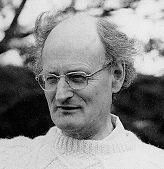
- Harlow, William
- (1500-1575)
- Scottish Presbyterian replaced John Knox
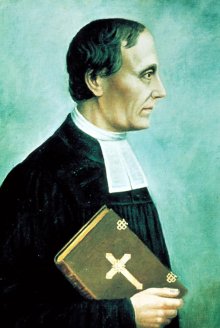
- Harnack, Adolf Carl Gustav Adolf Von
- (1851-1930)
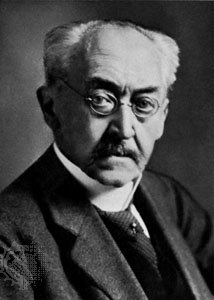
Harnack
- German Lutheran liberal theologian
- taught at Leipzig, Giessen, Marburg, and Berlin
- Ritschlian
- taught Social Gospel (fatherhood of God and brotherhood of man)
- wrote
- What is Christianity?
- History of Dogma
- The Mission and Expansion of Christianity in the First Three Centuries
- he criticized the Apostle's Creed
- Harris, Howell
- (1714-1773)
Howell Harris
- Welsh Calvinist Methodist
- associate of George Whitefield
- Hartmann, Nicolai
- (1882-1950)
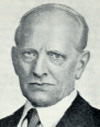
Nicolai Hartmann
- philosopher
- professor at Berlin and Gottingen
- wrote
- Ethics
- New Ways of Ontology
- Realist metaphysics
- Hartshorne, Charles A.
- (1897-2000)
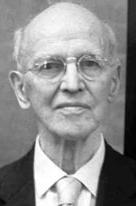
Charles A. Hartshorne
- Process philosopher
- taught at University of Chicago, Emory University, and University of Texas
- wrote
- Beyond Humanism
- Man's Vision of God
- Realist metaphysics
- Hatcher, William E.
- (1834-1912)
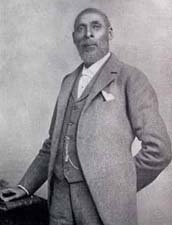
William E. Hatcher
- Plymouth Brethren preacher
- Hegel, Georg Wilhelm Friedrich
- (1770-1831)

Hegel
- German idealistic philosopher
- Absolute Idealism which is that all reality is mental and organic in nature
- dialectical materialism
- wrote
- Phenomenology of Mind
- Science of Logic
- Philosophy of History
- Regarding his theory of reality, he was an absolute idealist.
- Reality is the realization or unfolding of Spirit (Geist)
- Reality is a process similar to thought, a dialectic (thesis←→antithesis → synthesis) in which Spirit objectifies itself as the world and develops a knowledge of itself in the world.
- Hegel's system is built on the triad: Idea-Nature-Spirit.
- The Idea-in-itself (thesis) is that which develops.
- It is the dynamic reality of the world. In fact, it is that which exists before the world.
- The Idea-out-side-of-itself (Antithesis) is Space or Nature.
- Nature develops into man.
- In his consciousness the Idea becomes conscious of itself.
- This self-consciousness of the Idea is Spirit which is the antithesis of Idea and Nature.
- The development of this consciousness is History.
- History, in turn, is the autobiography of God or the reality of God.
- Through this history (i.e., the life of man and his institutions), Spirit achieves its goal of self-consciousness and freedom.
- In and through man and his growing self-consciousness and freedom, Spirit achieves its own realization as freedom the Idea which understands itself.
- Parallel with the rational dialectic is the dialectic of events.
- From every thesis in thought and event arises a necessary opposition which is called antithesis.
- The conflict or merging of the two results in synthesis.
- The synthesis is a higher reality or truth that goes beyond either the thesis or antithesis.
- Spirit is the dialectic process taken as a whole.
- "What is rational is real, and what is real is rational."
- Particular entities or events are real only as aspects of the life of Spirit.
- Regarding his theory of mind:
- Individual minds are the Absolute Mind (Spirit) objectifying itself and becoming self-conscious in human self-consciousness.
- Mind exists
- subjectively as knowing and reasoning
- objectively as nature and history
- absolutely as the Idea.
- The world is not inner reality and outer appearance; the inner is the outer -- mind is the body; nature is the absolute objectified in space and time.
- Nature is visible Spirit; Spirit is invisible Nature.
- Mind evolves as
- soul (mind dependent on nature)
- consciousness (mind opposed to Nature)
- Spirit (mind reconciled with Nature in understanding and knowledge.
- The Absolute
- embodies itself first as the individual (soul)
- becomes conscious of itself as other than merely body (consciousness)
- then develops self-consciousness as Spirit
- In self-consciousness, mind combines subject and object and becomes Spirit (i.e., Reality).
- In other words, soul and body are annulled by their opposition, but in another sense are preserved by the resulting synthesis as Spirit, at a higher level.
- Hegel characterized this end by the fortuitous German word aufgehoben.

Hegel's Dialectic
| Thesis IDEA Idea-in-itself |
Antithesis NATURE Idea-outside-itself |
Synthesis SPIRIT Idea-in-and-for-itself |
|
| Structure: a fundamental manifestation |
Logical or Rational Dialectic |
Physical Space-Time |
Time (as "used through" time or time of self-consciousness) |
| Science as fundamental discipline |
LOGIC | GEOMETRY | HISTORY |
- Heidegger, Martin
- (1889-1976)
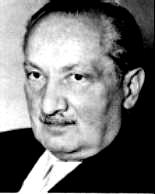
Heidegger
- German existentialist
- almost an atheist who is concerned with ontology
- wrote
- Existence and Being
- Was ist Metaphysik?
- Being and Time
- über den Humanismus
- An Introduction to Metaphysics
- The fundamental question is "What is the meaning of Being?"
- Initially, Heidegger was interested in phenomenological analysis of the Dasein (human existence); later he realized that Being is prior to Dasein and reveals itself in the Dasein as an "irruption" of truth (i.e., the meaning of all there is).
- The Dasein (human "being-in-the-world") is characterized as a field of relations rather than as an entity alongside of or among other things.
- It is characteristically "fallen" or estranged (Verfallenheit), the overcoming of which recovers "truth."
- Man does not create his world (i.e., give it meaning); rather "it is Being that creates for itself the ear destined to hear and the words that carry its revelation."
- But Being is not God in the traditional theistic sense.
- Heidegger uses the etymology of the Greek aletheia (truth) as "the hidden being which reveals itself."
- Existential truth is "openness" to existence rather than the intellectual grasp of an idea. A man does not "know the truth," he exists "in the truth."
- Heim, Karl
- (1874-1958)
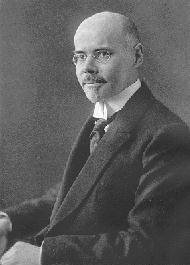
Karl Heim
- German Lutheran theologian
- professor at Halle, Munster, and Tübingen
- wrote
- God Transcendent
- Christian Faith and Natural Science
- related theology and Scripture to science
- influenced by Buber
- Christian apologist who defended the belief in a transcendent God
- against Nazi ideas that God was immanent in the spirit of the race
- Heisenberg, Werner Karl
- (1901-1976)
Heisenberg
- professor at Leipzig
- wrote Physics and Philosophy
- stated Principle of Uncertainty
- HEISENBERG'S PRINCIPLE OF UNCERTAINTY
-
- Sometimes called principle of Indeterminacy.
- Proposed by Heisenberg.
- Along with Bohr's principle of Complementarity, contrasted with the assumptions of classical physics, state that the position and velocity of atomic physical entities cannot be established simultaneously. If we know its position, we cannot know its velocity; if we know its velocity, we cannot know its position.
- Helm, Paul
-
- Teacher of Philosophy in U. of Liverpool
- Wrote
- The Varieties of Belief, Divine Revelation
- Calvin and the Calvinists
- Helmholtz, Hermann Ludwig Von
- (1821-1894)
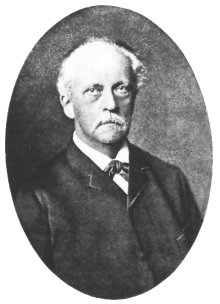
H. Helmholtz
- German physicist who helped prove the law of the conservation of energy
- who worked with acoustics
- who measured the speed of nerve impulses.
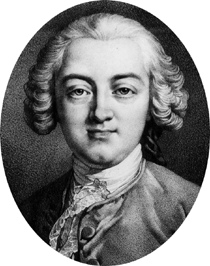
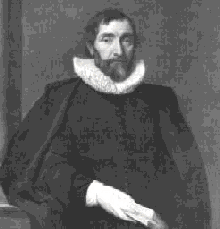
- Henry, Carl F. H.
- (1913-2003)
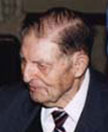
Carl F. H. Henry
- US Baptist
- editor of Christianity Today
- wrote Twilight of a Great Civilization: The Drift Toward Neo-Paganism
- Henry, Matthew
- (1662-1714)
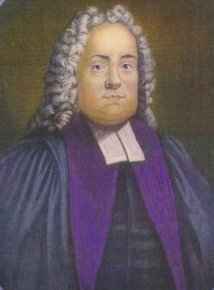
Matthew Henry
- English Presbyterian Puritan preacher served 25 years in one church
- taught by his father at home
- studied law
- wrote Expositions of Holy Scripture.
- Heraclitus of Ephesus
- (533-475 BC)
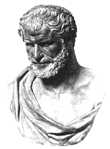
Heraclitus
- Called "the obscure philosopher."
- Change is the basic reality.
- Everything is in a process of change (flux)
- this change is controlled by an intelligent law called logos (not to be confused with the biblical term for Christ, although some have accused biblical writers of borrowing from Heraclitus)
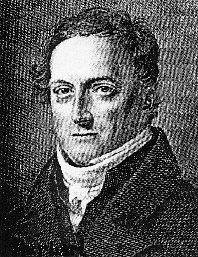
- Herbert, Edward, Lord Cherbury
- (1583-1648)
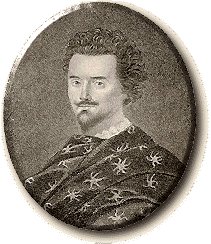
Edward Herbert
- Deist
- wrote De Veritate
- influenced by Montaigne
- supernatural revelation is not necessary for religion.
- HEREDITY
-
- A factor in Darwin's Principle of Natural Selection.
- Surviving organisms transmit their traits to offspring.
- Hermit
-
- See Peter the Hermit
- Herrmann, Wilhelm
- (1846-1922)
- Liberal German professor at Marburg
- Ritschlian
- wrote
- Communion of the Christian with God
- Systematic Theology
- Hesse
-
- See Philip of Hesse
- Hibben, John G.
-
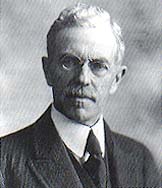
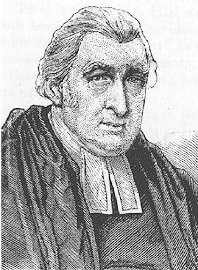
John G. Hibben
- President of Princeton from 1912-32
- Hippolytus
- (c 170-236)
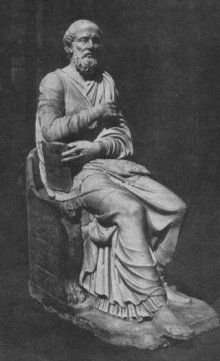
Hippolytus
- Greek member of church in Rome
- split the church against Bishop Callistus
- wrote
- A Refutation of All Heresies
- The Apostolic Tradition
- a commentary on Daniel
- Hobbes, Thomas
- (1588-1679)
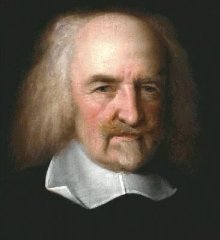
Thomas Hobbes
- wrote
- Leviathan
- Behemoth
- Human Nature
- On the Body Politic
- On the Citizen
- On Body
- On Man
- Regarding his theory of reality:
- All that is, is "body"
- if there is God, God is also "body"
- the mechanism that Galileo and Descartes ascribed to the material or extended world is also ascribed to the human world
- nothing whatever is immaterial (naturalism)
- all "bodies" are subject to efficient causes (mechanical materialism)
- man is solely "body" subject to forces which move him emotionally as well as physically (behaviorism).
- Regarding his theory of knowledge:
- sensations (phantasms or sense images) produced by bodily motion together with reason constitute knowledge
- but reason is not a "light" illuminating universal truths, as in medieval or Cartesian philosophy, nor is it an activity of a mind in any sense (there is no mind)
- rather reason is an epiphenomenon of the human body such that certain operations like naming, identifying natural causes, or symbolic references occur
- although the human understanding can ascribe general names, there are no universals either as independent entities (as, e.g., Plato's Ideas) or as mental entities (as, e.g., Abelard's concepts) (nominalism)
- thought of any kind arises as an "endeavor" or reaction (response) to outside forces (stimuli) in the form of phantasms or sense images
- thought is the succession of these or their epiphenomena
- truth consists in the coherence of one's speech and thought as a symbolic system rather than in the correspondence to fact
- knowledge is the coherent and successful organization of linguistic symbols rather than the intellectual grasp of some objective reality
- the purpose of knowledge is the control of nature, including human nature
- although a rationalist and determinist, Hobbes showed his scepticism in his hesitations about the objectivity of causal demonstrations and in his view -- unlike other rationalists -- that reason is epiphenomenal rather than metaphysical; there is, e.g., no cognito as in Descartes.
- Said Scripture is not contrary to reason. A forerunner of Deism.
- wrote
- Hocking, William Ernest
- (1873-1964)
- US professor at Harvard
- moderate Personal Idealist
- emphasized individual minds, not one great mind
- like Pringle-Pattison
- missionaries should do social work
- wrote
- The Meaning of God in Human Experience
- Human Nature and Its Remaking
- Living Religions and a World Faith
- Types of Philosophy
- Hodge, Archibald Alexander
- (1823-1886)
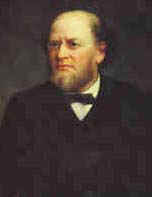
A. A. Hodge
- US Presbyterian theologian
- taught at Princeton
- son of Charles
- wrote
- The Atonement
- The Confession of Faith
- Evangelical Theology
- Outlines of Theology
- Hodge, Charles
- (1797-1878)
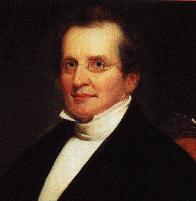
Charles Hodge
- US Presbyterian professor of systematic theologian at Princeton
- wrote Systematic Theology 3-vol.
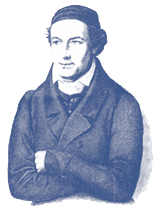
- Höffding, Harald
- (1843-1931)
- professor at Copenhagen
- wrote The Philosophy of Religion
- Neo-Kantian
- Hoffmann, Mehior
- (c1496-1544)
- Anabaptist preacher
- followers are called Melchiorites
- Held to a passionate eschatology, a "heavenly flesh" Christology, spiritualist view of Communion.
- Said that an experience with the Holy Spirit interprets Scripture.
- His last 10 years were spent in Strasbourg prison.
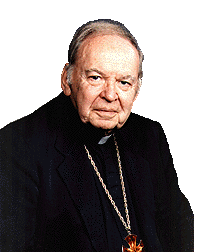
- Hofmann, Johann Christian Konrad von
- (1810-1877)
- German Lutheran theologian
- Erlangen school
- Wrote Heilsgeschichte
- Holbach, Paul
- (1723-89)
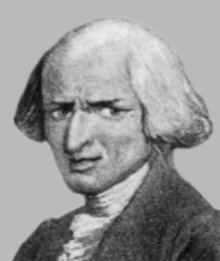
Paul Holbach
- Also known as: Paul Henri Thiry, Baron d'Holbach
- He was an atheist, determinist, materialist
- the universe is a complex system of physical substances organized according to mechanistic laws of cause and effect, rather than designed by God
- HOLISM
-
- Theories of mind, such as those of Gestalt psychology and emergentism, which deal with mind in terms of its total organization and behavior.
- Hontheim, Johann Nikolaus von
- (1701-1790)
- wrote under name of Justinus Febronius
- contested papal infallibility
- groups of bishops or Christians have more power than the pope
- opposed ultramontanism
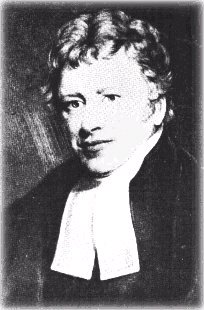
- Hooker, Richard
- (c 1554-1600)
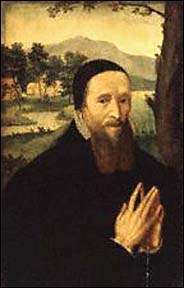
Richard Hooker
- Anglican theologian
- confronted Puritans
- founded colony at Hartford, Connecticut
- wrote Laws of Ecclesiastical Polity
- Hooker, Thomas
- (1586-1647)
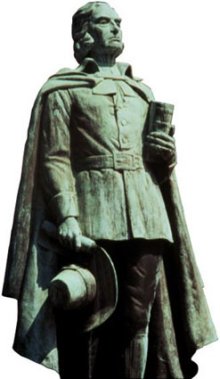
Thomas Hooker
- Left England because of Archbishop Laud
- founded Hartford congregation
- helped write constitution for Connecticut
- Hooper, John
- (c 1495-1555)
- English Reformer
- popular preacher
- friend of Bullinger
- bishop of Gloucester and Worcester
- burned at stake under Mary Tudor
- Hopkins, Samuel
- (1721-1804)
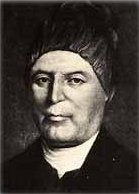
Samuel Hopkins
- US Congregational pastor in one church for 25 years and another for 33
- moderate Calvinist
- dull preacher with poor delivery
- Hort, Fenton John Anthony
- (1828-1892)
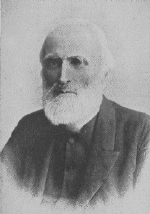
Fenton Hort
- Anglican
- wrote The Way, the Truth, the Life
- assisted Westcott in Greek NT
- Howard, John
- (1726-1790)
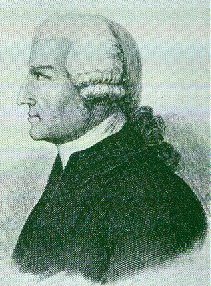
John Howard
- was imprisoned by pirates in France
- sought for prison reform
- wrote State of the Prisons
- Howe, John
- (1630-1706)
- English Anglican Puritan who tried to unite British Presbyterians and Independents
- wrote Blessedness of the Righteous
- Howison, George Holmes
- (1834-1916)
- professor at University of Calif.
- wrote The Limits of Evolution
- pluralistic personal idealist
- emphasized individual minds, not one great mind; like J. McTaggart's view.
- Hübmaier, Balthasar
- (c 1480-1528)
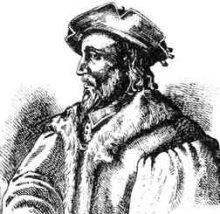
Hübmaier
- German Anabaptist
- imprisoned and burned for preaching believer's baptism
- his wife was drowned in the Danube River
- Hughes, Philip Edgcumbe
-
- Australian Anglican
- wrote
- A Commentary on Second Corinthians
- Theology of the English Reformers
- Interpreting Prophecy
- Hope for a Despairing World
- Hugh of St. Victor
- (c1096-1141)
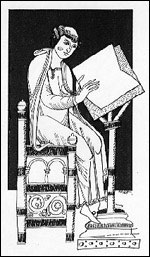
Hugh of St. Victor
- Wrote Summa Sententiarum
- Said that Faith is a certainty "above opinion and below science."
- Hume, David
- (1711-1776)
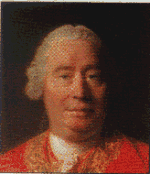
David Hume
- Scottish empiricist philosopher
- criticized rational proofs for existence of God
- denied miracles.
- Wrote An Enquiry Concerning the Human Understanding.
- Regarding his theory of knowledge:
- all knowledge derives from perceptions
- Perceptions consist in
- impressions (original experiences)
- ideas (copies or memories of impressions)
- Impressions are
- prior to and more lively than ideas
- sensations of external sense data (i.e., color, etc.)
- reflections on internal feelings (i.e., emotions)
- copied by memory or imagination to form simple ideas.
- Simple ideas combine to form complex ideas according to the laws of
association of ideas:
- law of resemblance (similar ideas associate)
- law of contiguity (ideas together in space or time associate)
- law of causality (the constant conjunction or sequence of ideas suggests causal association).
- Valid knowledge consists in ideas reducible to specific impressions.
- Ideas like causality, substance, the self, and God cannot be reduced to impressions, hence are convenient grammatical fictions.
- We cannot know an external world.
- "As no beings are ever present to the mind but perceptions, we can never observe a relation of cause and effect between perceptions and objects."
- Hus, John
- (c 1369-1415)
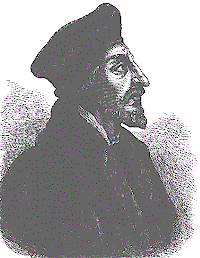
John Hus
- Leader of Roman Catholic church in Bohemia
- influenced by Wycliffe
- burned as a heretic.
- He defined the church as Christ-like living not by sacraments.
- His followers are called Hussites but were also known as Unitas Fratrum or Bohemian Brethren
- Five crusades were directed against them
- influenced by Waldensians
- exist today as the Moravian church.
- emphasized authority of Scripture over church
- demanded partaking of cup by laity
- denied transubstantiation, veneration of saints, indulgences, and auricular confession
- read Scripture in vernacular (not Latin).
- Husserl, Edmund
- (1859-1938)
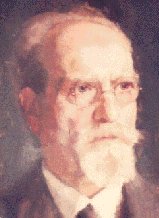
Edmund Husserl
- German philosopher
- professor at Halle, Göttingen, and Freiburg
- wrote Ideas
- Phenomenologist who borders on mysticism
- Philosophy is a rigorous science of the structures of meaningful conscious experience of "things themselves."
- The primary structure is intentionality.
- Attention is directed to "objects" insofar as they are intended by consciousness (i.e., the "ideal essences" of "things themselves").
- These essences are neither ideal (Plato) nor psychological (Hume) realities.
- Transcendental phenomenology is the descriptive analysis both of the essences intended by consciousness and of the consciousness in the act of intending objects (i.e., giving meaning to the world).
- The "transcendental ego" is Husserl's name for the constituting intentionality of consciousness; it is concrete rather than formal, as in Kant.
- There is only one world (not things-in-themselves and things-as-they-appear, as in Kant).
- The object (or world) is not constructed by consciousness under a priori categories; it is already tied to consciousness by intentionality in a "Life-World."
- The world gives itself to consciousness, which reciprocates by giving meaning.
- Nor is consciousness or the transcendental ego a "thinking thing," as in Descartes, which looks "out" at the world; it is immersed in the "Life-World" and becomes aware of itself reflexively in the act of intending the world and reflecting upon it.
- HUTTERITES
-
- a radical communal reformation group started by Jacob Hutter.
- See the Anabaptists with whom they share some distinctive characteristics.
- Huxley, Aldous
- (1894-1963)
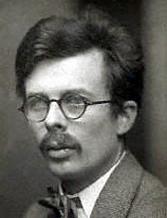
Aldous Huxley
- English novelist.
- His early works were very negative.
- Interested in the influence of science on society.
- Wrote Brave New World.
- Brother of Julian.
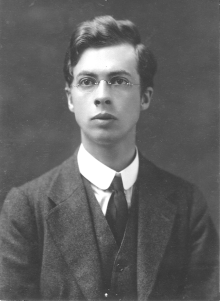
- Huxley, Thomas Henry
- (1825-1895)
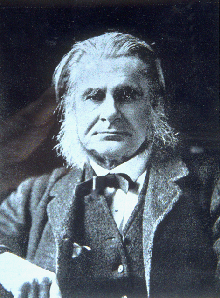
Thomas Huxley
- English scientist who popularized the theory of evolution.
- Wrote Science and Christian Tradition.
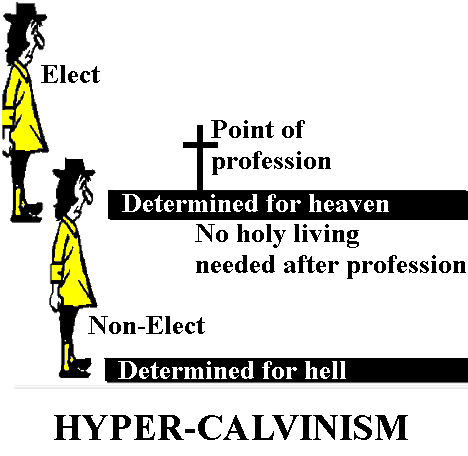
- HYPER-CALVINISM
-
- Also called Supralapsarian or Hard Determinism
- Before time began, God selected from all the men to be created a certain number for salvation and the rest He determined for hell
- Thus election and reprobation precede His purpose to create
- It does not matter if we resist God's purpose for us, we will go to heaven or hell regardless
- It does not matter what we do on the earth
- If we are destined for hell, no amount of repentance, faith, etc. will ever get us to heaven
- If we are destined for heaven, no amount of sin will ever change it -- we can sin all we want
- If God saves whom He wants, then there is no sense in missions for God will save the elect no matter what !!