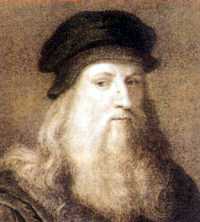
- Dale, Robert W.
- (1829-1895)
- British Congregational preacher
- served in one church for 36 years
- involved in political issues.
- Damascus
-
- See John of Damascus
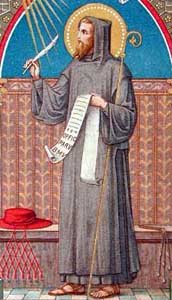
- Danforth, Samuel
- (1626-1674)
- Pastor in Connecticut for 24 years
- helped John Eliot.
- Darby, John Nelson
- (1800-1882)
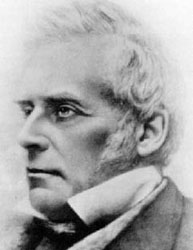
John Nelson Darby
- Irish minister
- early leader of Plymouth Brethren (or Darbyites)
- popularized dispensationalism
- influential in restoring simple Christian practice and faith with conversion, immersion, pre-millennialism, and every Christian a minister
- Wrote On the Nature and Unity of the Church of Christ
- Dargan, Edwin Charles
-
- US Southern Baptist taught homiletics and biblical theology at Southern Baptist Seminary
- wrote History of Preaching
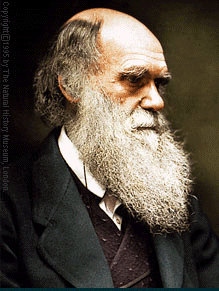
- DARWINISM
-
- See Social Darwinism
- DASEIN
-
- German word for "presence" or "existence"
- a term of existential psychology
- popularized by Heidegger
- See The False Dasein
- Davenport, John
- (1597-1670)
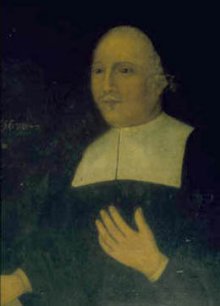
John Davenport
- Anglican preacher who became Congregational
- preached sensational revival sermons
- a founder of New Haven Colony
- Davidson, John
- (1549-1603)
- Scottish preacher
- attracted large crowds
- persecuted for his evangelical faith
- Davies, Samuel
- (1724-1761)
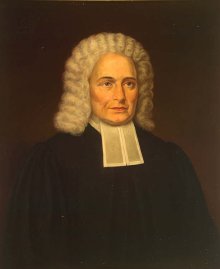
Samuel Davies
- Succeeded Jonathan Edwards as President of Princeton.
- de Beauvoir
-
- See Beauvoir
- de Burgh
-
- See Burgh
- de Chardin
-
- See Teilhard
- de La Mettrie, Julien Jean Offray
-
- See La Mettrie
- de Unamuno
-
- See Unamuno
- DEDUCTIVE REASONING
-
- Reasoning from the general to the particular
- Analytical method developed by Aristotle
- Compare Inductive reasoning
- DEISM
-
- The view states God set the world in motion, but has been absent from it ever since
- In the 1700s it meant that natural theology alone can answer all the questions of life.
- DEIST
-
- A person who holds to Deism
- Democritus
-
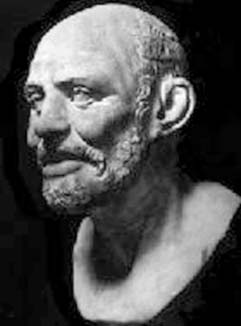
Democritus
- Combined the sensualism of Protagoras and the rationalism of the pre-Socratics
- perceptions yield opinions
- reason gives knowlege of reality
- reality consists in an infinite number of material atom-forms having primary qualities (form, inertia, etc.) and rearranging themselves in an infinite space
- reason must abstract knowledge of them from the secondary qualities of perception (color, taste, etc.)
- reason is itself a product of matter in motion
- mind-atoms are "hit" by images (small copies) of objects, giving rise to perceptions from which scientific knowledge must be abstracted
- DEONTOLOGICAL ETHICAL THEORY
- (c 460-c 370 BC)
- Concerned with moral obligation (the right) rather than ends or consequences
- Moral obligation relates to duty, the ought, rightness, or appropriateness
- Moral obligation has priority over moral value
- DEPTH
-
- See Depth psychology
- DEPTH PSYCHOLOGY
-
- Any of the psychologies deriving from Freudian psychoanalysis.
- Descartes, Rene
- (1596-1650)

Descartes
- philosopher and mathematician
- "I think therefore I am"
- goal of knowledge is certainty
- certainty derives from intuition and deduction
- certainty requires systematic doubt (methodological skepticism)
- this systematic doubt leads to indubitably clear and necessary first principles from which all necessary and genuine knowledge can be deduced (e.g., the science of geometry)
- The Cartesian method invokes four rules as guides in moving from opinion to
science:
- Never accept anything as true unless it is clearly and inescapably so
- Analyze or reduce a problem to resovable parts
- Organize particulars into general knowledge
- Check for completeness and negative cases
- Reality for man is two substances: matter (i.e., extension in space and time) and mind (unextended thinking spirit mirroring the material world)
- God is absolute substance, uncreated, unmoved, and perfect creator of matter and human minds.
- As the inner world of consciousness, mind is free and motivated by God.
- As the outer world of space, matter constitutes the mechanism of the world machine set in motion by God, who is first cause, and is continued in motion according to inherent and necessary laws of nature (determinism).
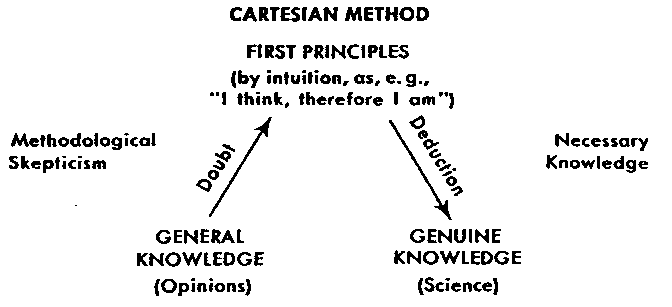
Cartesian Method
- DETERMINISM
-
- Everything that happens has a cause
- For every event in the universe, there is a set of conditions such that if the conditions were repeated, the event would be repeated
- All events are lawful because they are predictable
- Also see
- Dewey, John
- (1859-1952)
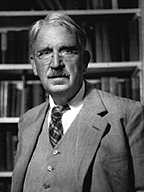
John Dewey
- professor at Chicago and Columbia
- philosopher and educational theorist
- pragmatist
- designed progressive education
- strong evolutionist
- critical of traditional religion
- humanist
- emphasized science, intelligence and education
- wrote
- A Common Faith
- The Quest for Certainty
- How We Think
- Reconstruction in Philosophy
- Human Nature and Conduct
- Art as Experience
- Don't confuse him with Melville Dewey who devised the Dewey Decimal system of library classification.
- DeWolf, L. Harold
- (1905-1986)
- Methodist theologian at Boston University and Wesley theologian Seminary
- advocated use of reason in religion.
- d'Holbach, Paul Henri Thiry, Baron
-
- See Holbach, Paul
- Dibelius, Martin
- (1883-1947)
Martin Dibelius
- German NT scholar
- helped to found the form criticism school of study.
- Dibelius, Otto
- (1880-1967)
- German Evangelical Church
- against Nazi dictatorship
- emphasized "a theology of the cross."
- Dickinson, Jonathan
-
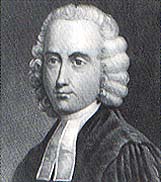
Jonathan Dickinson
- First president of Princeton.
- After graduating from the Collegiate School of Connecticut (later known as Yale), Dickinson studied theology and became minister of the Presbyterian Church in Elizabeth, NJ.
- He served this church all his life, ministering to his flock as pastor, lawyer, physician, and, in later years, instructor of young men preparing for professional careers.
- Dietrich, Viet
- (1506-1549)
- German Lutheran secretary to Luther.
- DIMENSIONAL BEYONDNESS
-
- A concept used by Kierkegaard to convey the idea of transcendence.
- Transcendence is thought of not as spatial distance, but as God's being is in a different dimension altogether, or in a different realm of reality, from that in which we exist.
- Dioscorus Patriarch of Alexandria
- (d 454)
- against Nestorianism
- supported Eutyches
- he was victorious at the Robber Council of Ephesus (449)
- but he was deposed at Council of Chalcedon in 451
- champion of monophysites
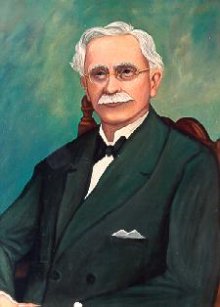
- Dodd, Charles Harold
- (1884-1973)
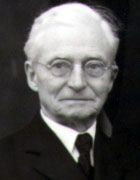
C. H. Dodd
- British Congregational pastor and NT professor at Oxford, Manchester and Cambridge
- known for concept of realized eschatology
- Doddridge, Phillip
- (1702-1751)
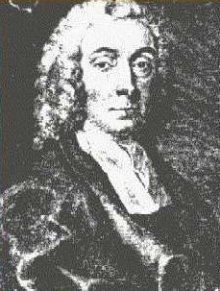
Phillip Doddridge
- British Non-conformist pastor
- wrote The Rise and Progress of Religion in the Soul
- Dodds, Harold W.
-
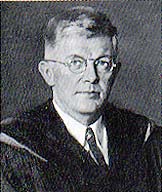
Harold Dodds
- President of Princeton from 1933-57
- Dooyeweerd, Herman
- (1894-1977)

Herman Dooyeweerd
- Dutch Reformed philosopher
- wrote New Critique of Theoretical Thought.
- Dorner, Isaak August
- (1809-1884)
- German theologian
- taught at Tübingen, Kiel, Konigsberg, Bonn, Gottingen, and Berlin
- Christ's incarnation was gradual and progressive.
- Dostoyevsky, Fyodor Mikhailovich
- (1821-1881)
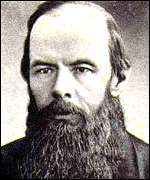
Dostoyevsky
- existentialist Russian
- wrote
- Brothers Karamazov
- Crime and Punishment
- House of the Dead
- The Idiot
- DOUBLE-ASPECT THEORY OF MIND
-
- The theory that both the body and the mind are manifestations of a more fundamental reality.
- DOUBLE PREDESTINATION
-
- supralapsarianism or hyper-Calvinism
- The view that before creation, God not only destined the elect to salvation, but He also destined the others to eternal damnation. Calvinism holds the first, but not the second
- First stated by Gottschalk
- DUALISM
-
- All things are forms of two substances.
- Pythagoras said that the world arises from a limitation of the unlimited.
- Plato said that the world consists in Matter and the Ideas.
- Other forms of dualism contrasted Evil and Good as two eternal entities.
- See Epistemological dualism
- Duns Scotus, John
- (c1266-1308)
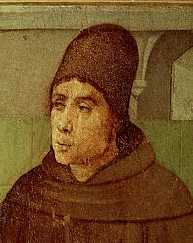
John Duns Scotus
- Franciscan scholastic
- taught at Oxford, Paris, and Cologne
- against Thomas Aquinas
- faith is primarily a matter of will, not of reason, therefore cannot be established by rational proofs.
- wrote
- Opus Oxoniense
- Questiones Quodlibetales
- Said that the knowledge of God cannot come from reason, but must be accepted on the basis of the authority of the Church.
- "A thing may at the same time be true in philosophy and false in theology."
- Influential in creating doctrine of Immaculate Conception.
- Protestants later coined the word "dunce" in reference to him.
- Durkheim, Emile
- (1858-1917)
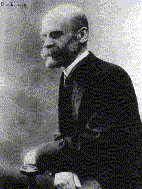
Emile Durkheim
- professor at Bordeaux and Paris
- held social origins of religion
- wrote Elementary Forms of the Religious Life
- sociological positivist
- truth and falsehood are determined by the society not by what an individual thinks
- even the laws of logic are a result of sociology
- primitive religion not based on animism but on totemism.
- Dwight, Timothy
- (1752-1817)
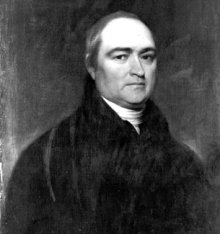
Timothy Dwight
- US Congregational pastor, theologian and educator
- Conservative Calvinist
- influenced Second Great Awakening
- converted Lyman Beecher
- President of Yale
- wrote Theology Explained and Defended.