- Sabellius
- (3rd cent)
- modalistic view of Trinity (God appears as the Father in the OT, as the Son in the NT, and as the Holy Spirit in the church).
- Followers are Sabellians
- SALVATION ARMY
-
- See Booth
- Samosata
-
- See Paul of Samosata
- Sanday, William
- (1843-1920)
- Anglican
- brought German biblical criticism to Britain
- Arminian
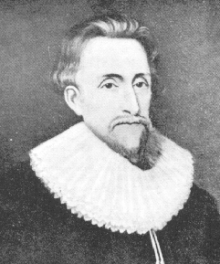
- Sangster, William Edwyn
- (1900-1960)
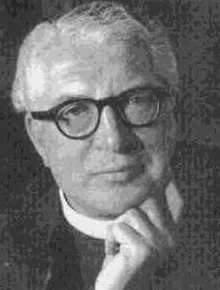
William Sangster
- British Methodist who wrote on preaching and Christian living
- Santayana, George
- (1863-1952)
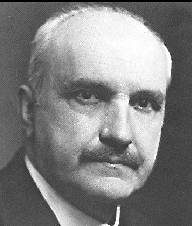
George Santayana
- aesthetic humanist
- wrote
- Skepticism and Animal Faith
- The Realm of Spirit
- Reason in Religion
- Winds of Doctrine
- Realms of Being
- Reality consists in a plurality of material existences known through the essences.
- Essences are the ideally possible modes or forms of matter.
- Material existences including minds embody essences.
- Minds intuit essences not material existences.
- Material existences must be accepted on "animal faith."
- God is the highest symbol of man's highest ideals
- Sartre, Jean-Paul
- (1905-1980)
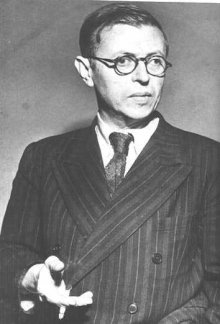
Jean-Paul Sartre
- French existentialist
- atheist
- wrote
- The Transcendence of the Ego
- Nausea
- Theory of the Emotions
- Being and Nothingness
- Critique of Dialectical Reason
- No Exit
- Existentialism Is Humanism
- Develops a "phenomenological ontology" centering on a reflexive analysis of consciousness, wherein "consciousness of something" is distinguished from the self-consciousness that is reflexively implicit or "mirrored" in "consciousness of something."
- As being-in-itself, the world is everything that is given meaning or structured by being-for-itself in the act of consciousness.
- As free and transcending self-consciousness, being-for-itself is nothingness.
- When one becomes self-conscious, one reflects on the pre-reflective consciousness of something else.
- The self of which I become conscious is not the subject performing the reflection, but its intentional object which has emerged in retrospect.
- In-itself it is nothingness.
- Though the world is objective, what it is in-itself (its structure) must be conferred by the knower as the creator of all meaning in the act of knowing.
- There is no antecedent human nature as a substantial self, as in Descartes, or transcendental self, as in Kant or Husserl.
- Also there is no God, whose essence is existence.
- There is only man, whose consciousness is existence without essence (i.e., nothingness).
- Existence is not the fact of existing in the usual sense.
- Existence is consciousness, and consciousness is nothingness.
- "Existence precedes essence."
- Essence (i.e., meaning, or what something is, etc.) must be chosen.
- Consciousness for-itself must choose itself by its acts or choices; this implies freedom.
- But freedom exists only as consciousness acts in relation to the world.
- Man is only as he "defines himself by his goals," i.e., only as he chooses his future.
- Savonarola, Girolamo
- (1452-1498)
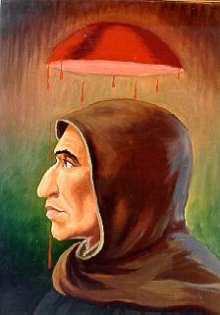
Girolamo Savanarola
- Italian Roman Catholic allegorical preacher appealed to emotions
- excommunicated for denouncing the pope for his immorality
- hanged and burned at the stake
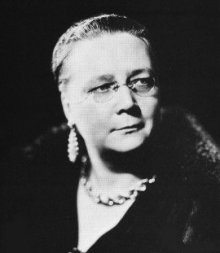
- Scarborough, Lee Rutland
- (1870-1945)
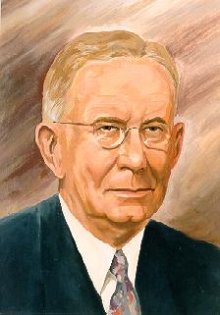
Lee Scarborough
- US Southern Baptist President of Southwestern Baptist Seminary
- SCEPTICISM
-
- See Emotivism
- Schaff, Philip
- (1819-1893)
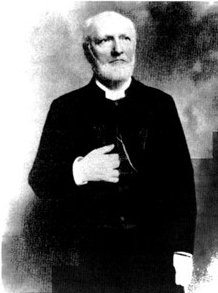
Philip Schaff
- Swiss theologian and church historian
- unsuccessfully accused of heresy
- taught at Union (NY)
- wrote
- History of the Christian Church (8 vol)
- Creeds of Christendom (3 vol)
- edited Schaff-Herzog Encyclopedia of Religious Knowledge.
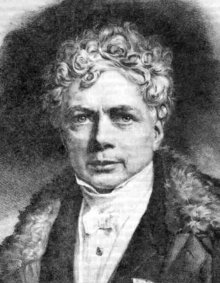
- Schleiermacher, Friedrich Daniel Ernst
- (1768-1834)
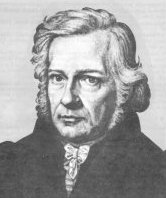
Friedrich Schleiermacher
- German theologian (Liberal)
- against traditional orthodox theology and German pietism
- religion is not a matter of belief or practice but of feeling of absolute dependence
- father of modern theology or the father of modern liberal theology
- wrote
- Discourse on Religion
- The Christian Faith
- On Religion: Speeches to Its Cultured Despisers
- ten volumes of sermons
- Schlick, Moritz
- (1882-1936)
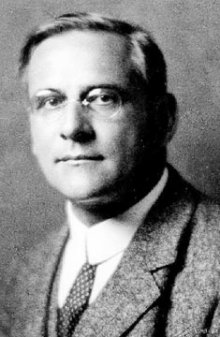
Moritz Schlick
- German philosopher
- founded logical positivists called Vienna Circle
- wrote
- Problems of Ethics
- Allgemeine Erkenntnisslehre
- Rejected synthetic a priori knowledge.
- Viewed philosophy as primarily logical analysis.
- Emphasized the analytical and a priori character of logic and mathematics.
- Distinguished empirical or factual from relational or logical knowledge.
- Limits knowledge to the empirical and the logical.
- Advocated a revised correspondence theory of truth (empirical realism).
- Scholasticus, Honorius
- (c1090-1156)
- Christian Platonist
- Schopenhauer, Arthur
- (1788-1860)
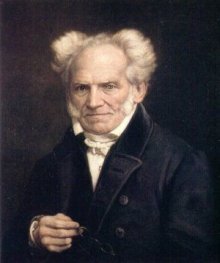
Arthur Schopenhauer
- Wrote The World as Will and Idea (or Representation).
- Voluntaristic idealism.
- Reality is a blind, irrational will, objectifying itself as man and the phenomena of his world.
- This will is Kant's "thing-in-itself" but can be introspectively and intuitively known.
- In man, the will becomes self-conscious and presents to itself by construction a phenomenal world of ideas or representations.
- This world is ordered in terms of the principle of causality, which is necessary to the conception of phenomena.
- Mind is a manifestation of will which is self-conscious and capable of understanding the forms of existence (i.e., the forms by which will objectifies itself).
- Phenomena appear to be plural, but in reality manifests the one universal will.
- Phenomena appear to be orderly and good, but in reality hide an irrational and evil will.
- The world as will representing itself to itself develops through several stages:
- the ideas that limit objectification to particular things
- a final objectification as human consciousness and its world of phenomena as representations.
- Ordinary knowledge is the activity of the will.
- Knowledge of the ideas bypasses this activity and turns the will on itself and its ideas or limitations; hence knowledge of the ideas no longer further objectifies will.
- Art penetrates the representations to the ideas, thus revealing reality.
- Tragedy, e.g., reveals the blindness and necessity of will.
- Music is the most revealing and liberating art, for it reveals the will itself
- Schweitzer, Albert
- (1875-1965)
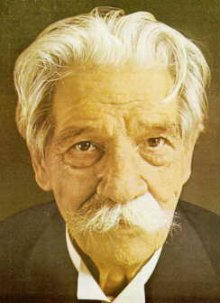
Albert Schweitzer
- German theologian, musician, and medical missionary
- had earned doctorates in theology, medicine, and music
- received Nobel Peace Prize in 1952
- said Jesus mistakenly believed the end of the world was near
- wrote
- The Quest of the Historical Jesus
- My Life and Thought
- lived sacrificially in medical work in Gabon, Africa
- SCHWENKFELDERS
-
- a radical mystical Reformation group begun by Schwenkfeld Von Ossig Caspar.
- See the Anabaptists with whom they share some distinctive characteristics.
- SCIENTIFIC LAWS
-
- descriptive generalizations having predictive value.
- Unlike theories, they are discovered rather than devised.
- Scofield, Cyrus Ingerson
- (1843-1921)
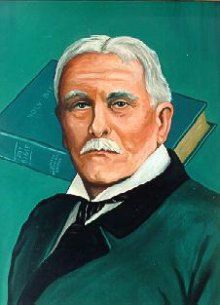
C. I. Scofield
- US Congregational pastor
- trained as a lawyer
- served in Confederate army
- influenced by Brookes
- founded Central American Mission
- popularized fundamentalism and dispensationalism
- helped found Philadelphia School of the Bible
- wrote
- Rightly Dividing the Word of Truth
- notes to Scofield Reference Bible
- Scroggie, William Graham
- (1877-1959)
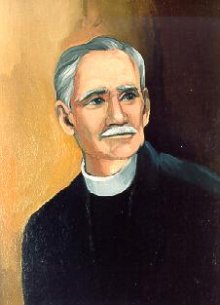
William Graham Scroggie
- British Baptist
- active in Keswick movement
- wrote many books
- SECULAR
-
- See Radical theology
- SEMIOTIC
-
- The general theory of signs and their applications as developed by Peirce and important for scientific empiricism
- SENSATIONALISM
-
- An early form of empiricism which taught that all knowledge derives from sensations passively received by the knower.
- SENSORY SKEPTICISM
-
- Sensations are relative and unreliable because they are modifications of the knower and no more a part of the world than is the pinprick a part of the pin.
- Shapiro, Harold T.
-
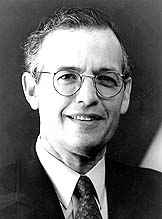
Harold T. Shapiro
- President of Princeton from 1988-2001
- Sharp, Granville
- (1735-1813)
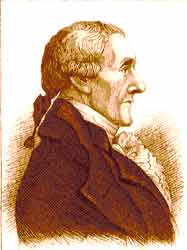
Granville Sharp
- associated with Claphan sect
- helped found Sierra Leone
- led to emancipation of slaves in England.
- Also known for Greek rule names after him.
- Sharp, James
- (1613-1679)

James Sharp
- Church of Scotland archbishop of St. Andrew's
- betrayed the Covenanters
- Shedd, William Greenough Thayer
- (1820-1894)
- Conservative US Calvinist theologian
- taught at Union (NY)
- wrote
- Dogmatic Theology (3 vol)
- The Doctrine of Endless Punishment
- Sheen, Fulton John
- (1895-1979)
Fulton John Sheen
- US Roman Catholic taught philosophy
- radio and TV preacher
- Shepard, Thomas
- (1605-1649)
- fled to New England to escape Archbishop Laud
- pastor at Cambridge, Mass.
- wrote The Sincere Convert
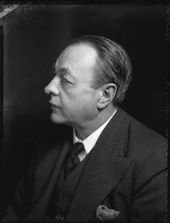
- Shields, Thomas Todhunter
- (1873-1955)
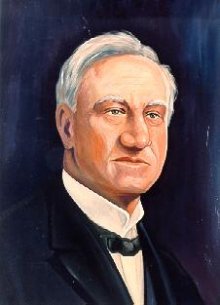
Thomas Shields
- Canadian Baptist pastored Jarvis Street Baptist Church in Toronto for 40 years
- attacked Romanism and liberalism
- Shoemaker, Samuel Moor
- (1893-1963)
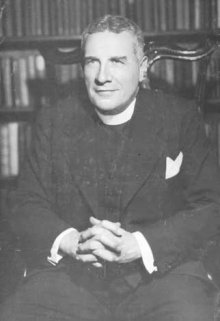
Samuel Shoemaker
- US Episc. preacher
- a founder of Alcoholics Anonymous
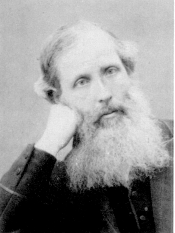
- Silva, Moises
-
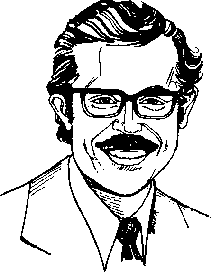
Moises Silva
- Prof. of N.T. at Westminster Theological Seminary (Phil., PA)
- wrote
- New Testament Survey
- Philippians
- Biblical Words and Their Meaning
- Simeon, Charles
- (1759-1836)
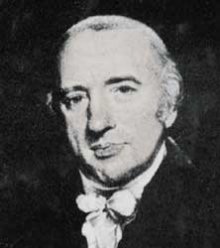
Charles Simeon
- Evangelical Anglican pastored church in Cambridge for 50 years
- sent out Henry Martyn
- published 21 vol. of Bible sermon outlines
- Simons, Menno
- (1496-1561)
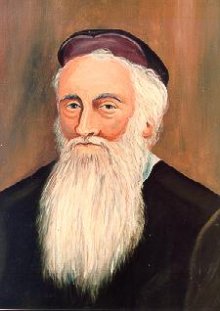
Menno Simons
- Roman Catholic priest
- became Anabaptist leader
- left Roman Catholic because of transubstantiation doctrine
- emphasized peace, non-resistance, prohibition of oaths and separation of church and state
- persecuted
- followers called Mennonites
- Simpson, Albert Benjamin
- (1844-1919)
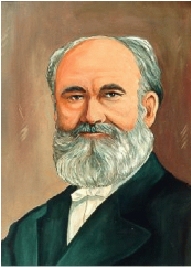
A. B. Simpson
- US Presbyterian pastor
- founder of Christian and Missionary Alliance
- established Nyack Bible College as first Bible College in North America
- wrote many books on Spirit-filled life, healing, and missions
- Simpson, Matthew
- (1811-1894)
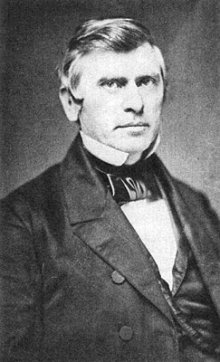
Matthew Simpson
- US medical doctor who became a Methodist preacher who preached to Abraham Lincoln
- against slavery
- pastored Presbyterian church in Washington DC
- President of Garrett Bible Institute
- wrote Lectures on Preaching
- SITUATION ETHICS
-
- A view promoted by Joseph Fletcher that the good and right thing to do depends upon the particular situation.
- It might be bad to do a certain thing in one context, but good or acceptable in another.
- Sizoo, Joseph Richard
- (1884-1966)
- US Reformed
- professor
- missionary
- Army chaplain
- President of New Brunswick Seminary in NJ
- Smith, Hannah Whitall
- (1832-1911)
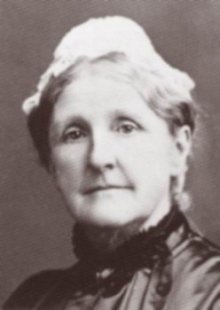
Hanna Whitall Smith
- US Quaker
- emphasized inward rest and outward victory
- popularized doctrine of sanctification as a second work of grace
- Smith, Henry Preserved
- (1847-1927)
- suspended for heresy for defending Briggs
- wrote
- The Religion of Israel
- Essays in Biblical Interpretation
- Smith, Samuel S.
-
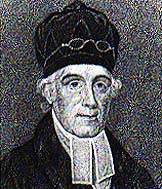
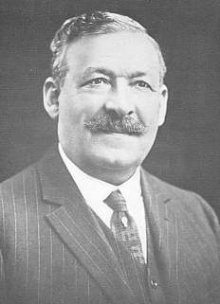
Samuel S. Smith
- President of Princeton from 1795-1812
- Smith, William Robertson
- (1846-1894)
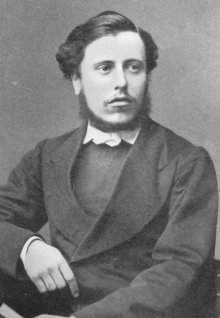
William Robertson Smith
- Scotland OT teacher at Free Church College at Aberdeen
- dismissed for views undermining inspiration of Scripture
- later became editor of Encyclopaedia Britannica
- professor of Arabic
- head librarian at Cambridge University
- Smyrna
-
- See Noetus of Smyrna
- Smyth, John
- (d 1612)
John Smyth
- British Baptist
- wrote Old Faith and New Life
- looked for compromise between science and the Bible
- Socinus, Faustus
- (1539-1604)
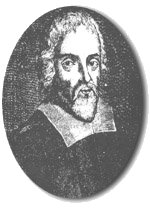
Faustus Socinus
- Italian Protestant non-Calvinistic reformer
- systematized rationalistic Christianity which turned into Unitarianism
- opposed orthodox view of original sin, human depravity, and justification by faith
- SOCIOLOGICAL POSITIVISM
-
- says religion is an aspect of totemism for which God becomes the expression of a deification of the group (Durkheim).
- SOCIOLOGICAL RELATIVISM
-
- Moral beliefs are not the same in different cultural groups.
- What is right in one culture is not necessarily right in another.
- Socrates
- (c 470-399 BC)
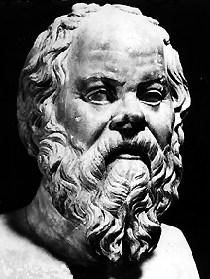
Socrates
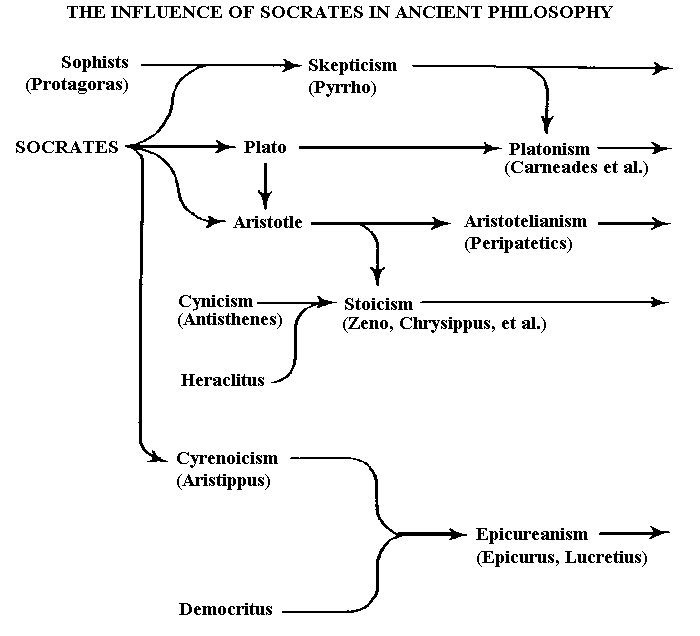
- Greek philosopher
- founded philosophy
- Plato was his student
- Agreed with the Sophists that knowledge of reality is uncertain.
- But moral knowledge is possible: "Virtue is knowledge," and there is virtue.
- Moral knowledge is universal (moral absolutism).
- Universal principles open to reason are those moral concepts in which all particular ideas agree.
- The Socratic method is dialectical and inductive: universals are derived from particulars by noting differences in identities and identities in differences.
Socrates
- SOFT DETERMINISM
-
- Also called Reconciliationism.
- Causality is a descriptive, empirical generalization about the world or a useful assumption for scientific investigation.
- It is not a priori or prescriptive.
- Causality is not compulsion, although compulsion is one kind of causality.
- The question is not whether moral choices are caused but how.
- Free choices and acts are uncompelled choices and acts consciously determined by interests, goals, etc., by the self or one's character.
- There can be no freedom, i.e., self-determination, without determinism (compatibilism).
- Responsibility is related to the degree of conscious self-determination or control by the individual.
- Avoidable acts are free; unavoidable (inadvertent) acts are not free.
- Unlike hard determinism, the cause of moral choices is settled later and by human character.
- Responsibility is limited to what a person will choose, given the kind of person he is.
- The agent is responsible, e.g., to the extent that he could have been a different kind of person.
- Praise, blame, reward, and punishment are justified only to the extent that they change a person or his behavior.
- Freedom is the possession of the requisite power to act and the absence of interference at any of these points: possible desires actual desires decisions acts.
- Also see
- SOLIPSISM
-
- I alone exist because I cannot know a world beyond myself and my ideas.
- This view leads to the Egocentric Predicament
- Sorley, William Ritchie
- (1855-1935)
- professor at Cardiff, Aberdeen, Cambridge
- wrote Moral Values and the Idea of God
- ethical emphasized
- Philosophy of Spirit
- spirit is ultimate reality but not same as Hegelian thought; man not only a purely physical being but also a spiritual one; all things (even inanimate things) have a kind of spiritual life of their own; emphasized on spirit as the agent of action, rather than merely thought; strong empirical emphasis
- SPACE, CONCEPTUAL
-
- The ideal space abstracted from perceptual space, having the properties of unity, isomorphism (i.e., homogeneity), continuity, infinity, and three dimensions (i.e., the objective space of classical physics).
- SPACE, PERCEPTUAL
-
- The subjective and qualitative sense of the relationship of entities arising from the organization of all perceptions.
- SPACE-TIME
-
- The four-dimensional continuum of relativity physics, motionless and changeless, for motion and change are relative to particular physical realities taken in terms of an individual space and time.
- Spencer, Herbert
- (1820-1903)
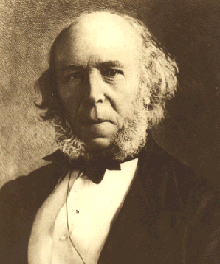
Herbert Spencer
- held to evolution in human society.
- Wrote First Principles.
- The world is a vast evolutionary process of matter, motion, and force.
- "Matter, Motion, and Force are not themselves ultimate realities, but represent the limits of knowledge" as modes of the unknowable.
- The redistribution of matter, motion, and force proceeds from the relatively indefinite state of homogeneity to the relatively heterogeneous integration and differentiation of matter.
- The principle of evolution applies to all aspects of existence from cosmology to culture.
- Knowledge of the source of evolution (the Unknowable) is not forthcoming (agnosticism).
- Spener, Philipp Jakob
- (1635-1705)
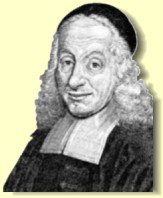
Philipp Spener
- German Lutheran pastor
- founder of Pietism
- wrote Pia Desideria ["Pious Desires"]
- Spinoza, Baruch (Benedict)
- (1632-1677)
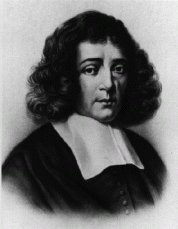
Baruch Spinoza
- Dutch Jewish philosopher
- wrote
- Ethics Based on Geometry
- Theologico-Political Treatise
- Reality is Infinite Substance or God.
- "By God, I mean a being absolutely infinite a substance consisting in infinite attributes."
- From the human standpoint, two attributes are intelligible: consciousness (mind) and extension (matter).
- mind and body, thought and motion, are parallel; the causal succession of physical events is paralleled by the logical succession of ideas (parallelism).
- God and the universe are one (pantheism).
- God is immanent cause not creator.
- All events are interdependent and necessary (determinism).
- "The whole endless series of bodies with their divisions, forms, and motions, are the modes of extension (matter), just as the endless series of minds with their ideas and volitions are the modes of consciousness (mind)."
- Spinoza's monism attempts the reconciliation of idealism and materialism.
- He is a rationalist in epistemology; pantheist in metaphysics.
- Spurgeon, Charles Haddon
- (1834-1892)
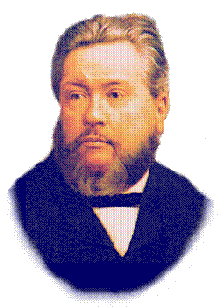
Charles Spurgeon
- British Baptist preacher in London's Metropolitan Tabernacle which seated 5000
- self-taught
- Calvinistic
- STAGE
-
- See Aesthetic stage
- Stalker, James
- (1848-1927)
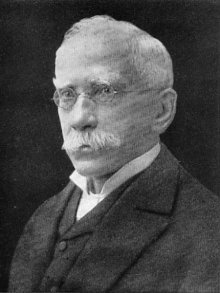
James Stalker
- Scotland United Free church
- professor
- friend of Moody
- interest in social concerns
- wrote on life of Christ and Paul
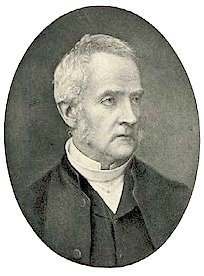
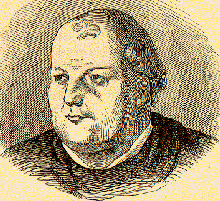
- Stearns, Shubal
- (1706-1771)
- converted under George Whitefield's preaching
- formed Baptist Association in Sandy Creek, NC
- Stoddard, Solomon
- (1643-1729)
- US Congregational preacher
- grandfather of Jonathan Edwards
- believed in regenerating power of Lord's Supper
- advocated Half-Way Covenant
- Wrote A Guide to Christ
- Storrs, Richard S.
- (1821-1900)
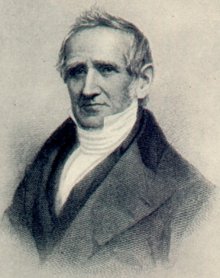
Richard S. Storrs
- US Congregational
- graduate of Amherst College
- began as a lawyer
- fundamentalist
- preached in one church for 54 years
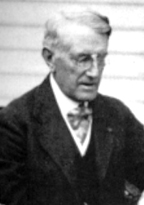
- Strauss, David Friedrich
- (1808-1874)
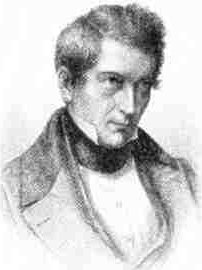
David Strauss
- German liberal theologian
- radical view of life of Jesus
- used Hegel's philosophy to interpret Christianity
- Mythological Quest
- wrote
- Life of Jesus
- The Old and the New Faith
- Abandoned Christianity for "religion of humanity."
- Strong, Augustus Hopkins
- (1836-1921)
A. H. Strong
- US Baptist pastor, theologian and educator
- wrote
- Systematic Theology
- STRUGGLE FOR EXISTENCE
-
- A factor of Darwin's Principle of Natural selection.
- Life reproduces in a greater number than can be sustained.
- SUBJECTIVISM
-
- Because knowledge is confined to ideas in the mind of the knower, it is impossible to get beyond these ideas to an objective or material reality separate from and independent of the knower.
- See Axiological subjectivism
- SUBSTANCE
-
- That which makes a thing what it is and not something else, i.e., essence (ousia) in Greek philosophy.
- Aristotle said essence equals substance.
- Aristotle said substance is the inherent essence or cause of a particular thing, i.e., the unity of its form and matter.
- In scholasticism, substance is that which exists and persists independent of any other being.
- In Cartesianism, substance is that which exists independent of any other being.
- Infinite substance is God; finite substance is mind and matter.
- In Spinoza, there is only infinite substance (God) and its modes.
- In Kantianism, substance becomes a subjective concept of the mind arising from the necessary organizing activity of Mind in connection with the data of experience.
- In British empiricism, substance is essentially the systematic or coherent organization of the specific qualities of experience. As such, it does not exist or is unknowable.
- SUMMUM BONUM
-
- The highest good.
- All values must be defined in terms of this ultimate value.
- All aims must lead to this single, ultimate aim
- Sunday, William "Billy" Ashley
- (1863-1935)
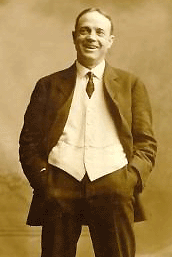
Billy Sunday
- He was a professional baseball player
- became US Presbyterian evangelist with highly sensational dramatic preaching style
- advocated temperance
- opposed theory of evolution
- SURVIVAL OF THE FITTEST
-
- A factor of Darwin's Principle of Natural selection.
- Better-adapted organisms survive, less-adapted perish.
- Evolution is eliminative rather than creative.
- Swedenborg, Emanuel
- (1688-1772)
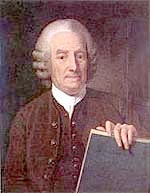
Emanuel Swedenborg
- Swedish scientist and engineer turned philosopher and religious thinker who was influenced by dreams and visions
- started Church of the New Jerusalem
- Swedenborgianism follows from his view:
- Neo-Platonic idea that universe and man not created by God but emanated from Him
- monopersonal Trinity
- example theory of atonement
- belief in second chance during intermediate state
- Swete, Henry Barclay
- (1835-1917)
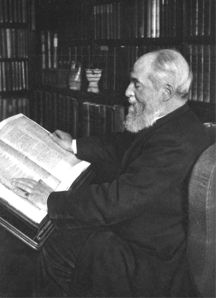
Henry Barclay Swete
- Anglican professor
- taught at King's College (London) and Cambridge University
- used conservative critical methods
- wrote on Holy Spirit
- SYMBOLIC (MATHEMATICAL) LOGIC
-
- Logic employing special or artificial symbols for the structures of propositions and arguments in the interest of clarity, precision, and the ease of reasoning.
- SYNOPTIC GOSPELS
-
- The first three New Testament books: Matthew, Mark, and Luke (but not John).
- These are studied together and harmonized.