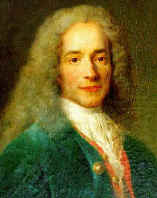
- Vaihinger, Hans
- (1852-1933)

Hans Vaihinger
- professor at Halle
- Neo-Kantian
- Wrote The Philosophy of As-If
- All abstract ideas are useful fictions that serve as instruments of the will to live.
- Knowledge is a means of orientation, prediction, and control in a world of sensations.
- "Because our conceptual world is a product of the real world, it cannot be a reflection of the real world."
- Knowledge does not reveal reality but helps us cope with it.
- Valla, Laurentius
- (1407-1457)
- Italian Renaissance philologist
- showed "Donation of Constantine" was spurious
- VanTil, Cornelius
- (1895-1987)
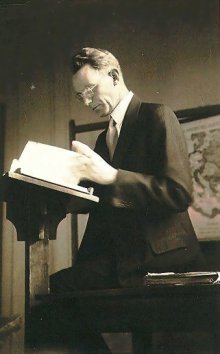
Cornelius Van Til
- Professor at Westminster
- defender of Calvinistic orthodoxy
- wrote
- Christian Apologetics
- An Introduction to Systematic Theology.
- VARIATION
-
- A factor in Darwin's principle of Natural selection.
- Each generation produces differences of structure and function in organisms.
- Varisco, Bernardino
- (1850-1933)
- Italian professor at Rome
- wrote
- The Great Problems
- Philosophy of Spirit
- spirit is ultimate reality but not same as Hegelian thought; man not only a purely physical being but also a spiritual one; all things (even inanimate things) have a kind of spiritual life of their own; emphasized on spirit as the agent of action, rather than merely thought; strong empirical emphasized
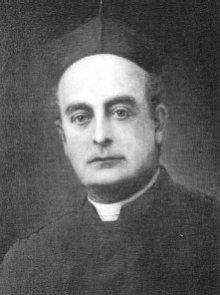
- Vaughan, Charles John
- (1816-1897)
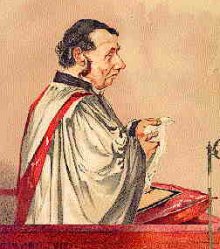
Charles John Vaughan
- Welsh Anglican
- wrote commentaries on the Bible
- VERIFIABILITY PRINCIPLE
-
- The central principle of Logical Positivism.
- A statement is true if there is some criteria by which we can verify the proposition or meaning it makes.
- Vermigli, Peter Martyr
- (1499-1562)
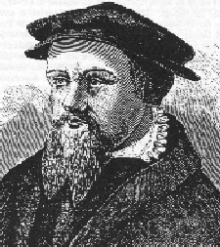
Peter Martyr Vermigli
- Italian reformer
- wrote and taught in Switzerland, England, and France
- Verona, Peter
- (1205-1252)
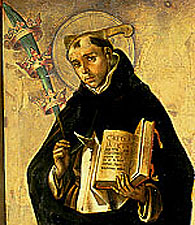
Peter Verona
- AKA Peter the Martyr
- Peter of Ravenna
- Roman Catholic Dominican
- assassinated by his enemies
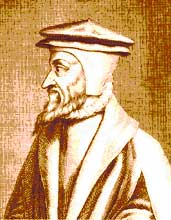
- Visser 't Hooft, Willem Adolf
- (1900-1985)
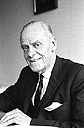
Willem Adolf Visser 't Hooft
- ecumenical leader
- head of World Council of Churches
- Karl Christoph Vogt
- (1817-1895)
- German naturalist and geologist
- See entry in 1911 Encyclopedia