- FACULTY PSYCHOLOGY
-
- A psychology of pragmatism and instrumentalism.
- Interpret the mind biologically in terms of behavior and environmental adaptation.
- Fairbairn, Andrew Martin
- (1838-1912)
- British Congregational theologian
- principal of Mansfield College at Oxford for 23 years
- worked on consciousness of Christ
- FAITH
-
- animal faith (Santayana">)
- blind faith
- leap of faith
- FALLIBILISM
-
- states that no empirical judgment can be certain.
- All empirical judgments are fallible or probable.
- See Antifallibilism
- FALSIFIABILITY PRINCIPLE
-
- Similar to the Verifiability Principle, but goes one step beyond by asking for the criteria by which a statement can be proven false.
- E.g., "What would it take to prove that Babe Ruth was not the greatest baseball player of all time?"
- See Karl Popper
- Farel, William [Guillaume]
- (1489-1565)
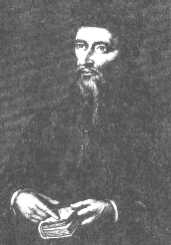
William Farel
- French Reformer called "the venturesome, big-voiced, red-bearded little evangelist."
- When the persecution of Protestants in France forced him to flee in 1523, he became a leader of a band of reformers preaching mainly in French-speaking Switzerland, and ending up in Geneva in 1530s.
- Farel's preaching had brought an end to Catholic masses, but the town's Protestantism rested on political hostility to the bishop, not doctrinal convictions.
- Thus he convinced Calvin to assist him.
- Geneva's city councils offered Calvin a position as "Professor of Sacred Scriptures."
- Calvin stayed for 2 years and was ordered to leave.
- Calvin went to Strasbourg and later moved back to Geneva, but Farel moved to Neuchâtel and reached other French towns.
- Farrar, Frederic William
- (1831-1903)
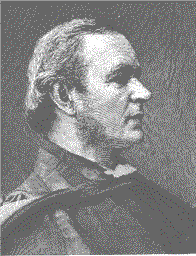
F. W. Farrar
- Liberal Anglican pastor and theologian
- questioned doctrine of eternal punishment.
- Farrer, Austin
- (1904-1968)

Austin Farrer
- Anglican philosopher, theologian, and pastor at Oxford
- wrote
- Finite and Infinite
- The Freedom of the Will
- The Glass of Vision
- FATALISM
-
- Events are predetermined by a cosmic purpose, plan, or will.
- Whatever is foreordained will occur no matter what.
- Human control is limited to attitude (e.g., resignation to the will of God).
- Nothing happens by accident or chance.
- Febronius
-
- See Hontheim.
- Febronius, Justinus
-
- see Hontheim.
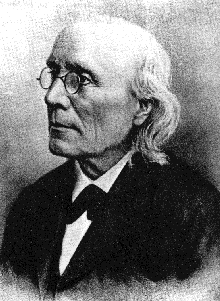
- Fenelon, Francoise de Salignac de la Mothe
- (1651-1715)
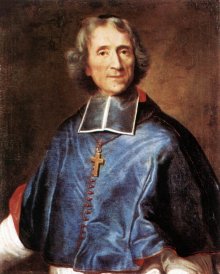
Fenelon
- French quietist, Jesuit
- favored the mystic writings of Madam Guyon and counselled her
- wrote
- Maximes des Saints
- Telemaque.
- Ferre, Frederick
- (1933-____)
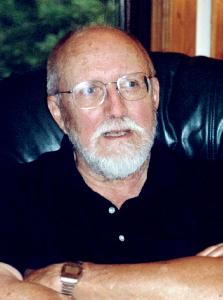
Frederick Ferre
- US philosopher of religion
- wrote Language, Logic and God
- emphasized the nature and function of theological language.
- Ferre, Nels F. S.
- (1908-1971)
- Swedish-American theologian
- emphasized love as central interpretive principle of theology
- taught at Andover Newton theologian School and Vanderbilt University
- wrote
- Christ and the Christian
- The Christian Understanding of God
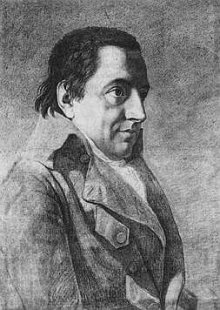
- Feuerbach, Ludwig Andreas
- (1804-1872)

Ludwig Feuerbach
- German philosopher
- idea of God is a human projection
- man creates God in his own image.
- FICTIONALISM
-
- Also called Fictionism.
- Vaihinger's theory of the "as if."
- All concepts are viewed as fictions lacking objective truth but they are useful as instruments of action.
- FICTIONISM
-
- See Fictionalism
- FICTIONS
-
- See Useful fictions
- Finley, Samuel
-
Samuel Finley
- Fifth president of Princeton
- Finney, Charles Grandison
- (1792-1875)
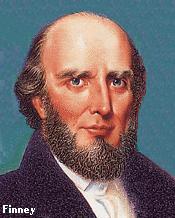
Charles Finney
- US Presbyterian pastor
- converted lawyer
- evangelist argued people into salvation
- professor and President at Oberlin College
- Arminian
- perfectionist sanctification.
- Flacius, Matthias
- (1520-1575)
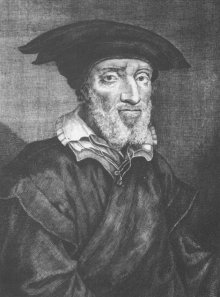
Melanchthon
- Lutheran theologian
- against Melanchthon for being too friendly with the Roman Catholics.
- Flavel, John
- (c 1630-1691)
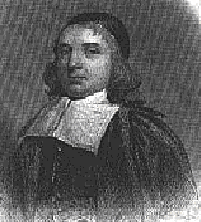
John Flavel
- British Puritan Presbyterian pastor
- popular writer
- wrote
- Treatise on the Soul
- The Methods of Grace
- The Mystery of Providence
- Fletcher, John
- (1729-1785)
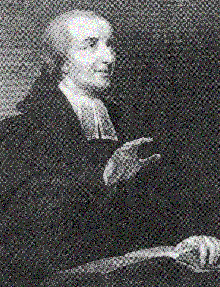
John Fletcher
- Methodist preacher who tried to mediate between Methodist Arminians and Calvinists.
- Fletcher, Joseph Francis
- (1905-1991)
Joseph Fletcher
- Episcopalian pastor
- emphasized situation ethics
- good is relative to the situation.
- Flew, Anthony
- (1923-____)
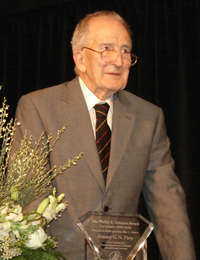
Antony Flew
- philosopher of analytical school
- falsification theory
- Also spelled: Antony Flew
- FORMALISM
-
- Any ethical theory in which the basic principles for determining our duties are purely formal.
- See Ethical formalism
- Forrest, Henry
- (1500-1553)
- Scottish Benedictine friar who became an evangelical but burned at the stake.
- Forret, Thomas
- (1490-1540)
- Scottish Roman Catholic preacher converted by reading Augustine
- memorized 3 chapters of Latin Bible daily
- burned at the stake.
- Forsyth, Peter Taylor
- (1848-1921)
- British evangelical Congregational theologian
- principal of Hackney College in London
- Fosdick, Harry Emerson
- (1878-1969)
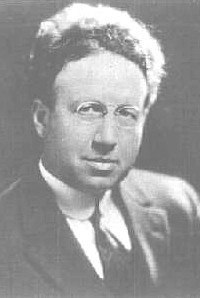
Harry Emerson Fosdick
- US theologian, Baptist preacher, and author
- wrote
- As I See Religion
- A Guide to Understanding the Bible
- The Modern Use of the Bible
- popularized liberalism
- against the fundamentalists
- taught at Union (NY)
- FOUR CAUSES
-
- Aristotle's theory that cause is not only efficient (as an act or a force) but also material (as the potential of matter), formal (as something directed according to plan), and final (as something initiated by some purpose or end).
- This theory of cause is seen in terms of a resulting end which is aimed at, but as yet it does not exist.
- Fox, George
- (1624-1691)
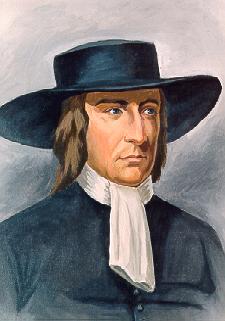
George Fox
- British and US founder of Quakers
- sought to improve prisons and education.
- Foxe, John
- (1517-1587)
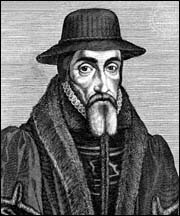
John Foxe
- English Puritan clergyman who wrote Book of Martyrs which appeared in 8 volumes in 1563.
- Francis of Assisi
- (1182-1226)
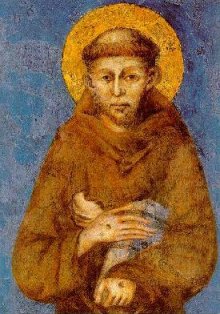
Francis of Assisi
- emphasized imitating Christ through absolute poverty, humility, and simplicity
- love for nature
- followers began the Franciscan Order.
- Francke, Auguste Hermann
- (1633-1727)
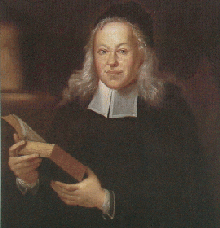
Auguste Francke
- Lutheran pietist
- mystic
- pastor
- founded University of Halle
- influence George Müller
- Frankl, Viktor
- (1905-1997)
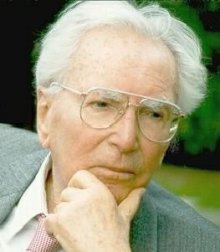
Viktor Frankl
- Jewish psychiatrist
- imprisoned in German concentration camp
- developed system of logotherapy
- Fraser, James
- (1639-1699)
- Scottish preacher
- imprisoned for his faith
- wrote A Treatise on Sanctification: An Explication of Romans Chapters 6, 7 and 8:1-4
- Alexander Whyte wrote his biography: James Fraser of Brae: An Appreciation
- Fratrum
-
- See Hus, John
- Frazer, James George
- (1854-1941)
J. G. Frazer
- Anthropology professor at Liverpool
- wrote The Golden Bough
- Positivist
- Naturalist

- Frelinghuysen, Theodorus Jacobus
- (c 1691-1748)
- US Dutch Reformed preacher who helped in Great Awakening
- blended Reformed theology and Pietism.
- Freud, Sigmund
- (1856-1939)
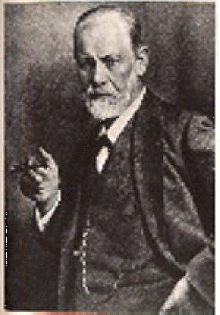
Sigmund Freud
- psychiatrist in Vienna
- Positivist
- Naturalist
- wrote
- Moses and monotheism
- Totem and Taboo
- Civilization and Its Discontents
- General Introduction to Psychoanalysis
- An Outline of Psychoanalysis
- New Introductory Lectures on Psychoanalysis
- The Mind (self) is conceived as a dynamic unity of three interacting and
interrelated components:
- id: the unconscious driving force originally identified with sex instinct but later associated with the opposing drives of eros (life instinct) and arakne (death instinct)
- ego: the conscious, thinking activity of self, calculatingly selfish in seeking its own satisfactions alone
- superego: originally the censor or the conscience of the self as an internalized social morality developed entirely in early childhood and as the result of conflict between the id (as child) and society.
- Ego or consciousness (mind in the usual sense) develops from the id in its encounter with the social and physical environment.
- FREUDIANISM
-
- says "Religion is a childhood neurosis and God is a father projection" (Freud).
- See Neo-Freudianism
- Froment, Antoine
- (1509-1584)
- French Reformed
- associate of William Farel.
- Fromm, Erich
- (1900-1980)
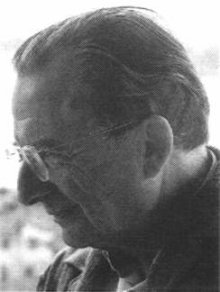
Erich Fromm
- German born American psychoanalyst
- wrote
- Psychoanalysis and Religion
- Marx's's Concept of Man
- Beyond the Chains of Illusion.
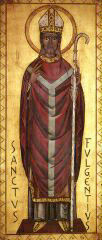
- Fuller, Andrew
- (1754-1815)
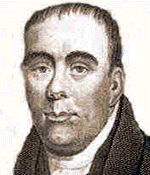
Andrew Fuller
- British Baptist founded Baptist Foreign Missionary Society which supported William Carey
- expository preacher
- Fuller, Charles E.
- (1887-1968)
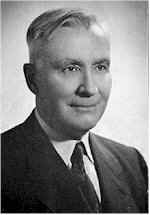
Charles E. Fuller
- US Presbyterian
- early radio preacher on "The Old Fashioned Revival Hour"
- founder of Fuller Theological Seminary.
- Fuller, Daniel P.
-
- Son of Charles
- He trained in Germany and became pro-neo-orthodox
- Teaches at Fuller theologian Seminary
- Wrote The Unity of the Bible: Unfolding God's Plan for Humanity.
- Fuller, Richard
- (1804-1876)
- US Southern Baptist preacher
- converted lawyer
- President of Southern Baptist Convention
- pastor for 24 years in Baltimore.
- FUNCTIONAL CHRISTOLOGY
-
- Emphasizes what Jesus did rather than who He was.
- He was someone who acted on behalf of God not someone who was God.
- The Bible makes only functional (not ontological) statements about Christ
- FUNDAMENTALISM
-
- See Evangelicalism.