- NATURAL SELECTION
-
- Darwin's view of evolution with five
principles:
- Proliferation of species
- Variation
- Struggle for existence
- Survival of the fittest
- Heredity
- Darwin's view of evolution with five
principles:
- NATURALISM
-
- Every aspect of human experience can be adequately accounted for in terms of human existence as a product of biological and cultural evolution.
- Also see Religious Humanism
- Neander, Johann August Wilhelm
- (1789-1850)
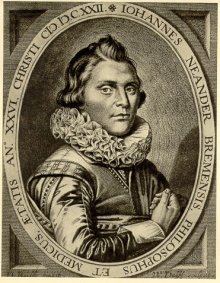
Johann Neander
- German church historian
- founder of modern church historiography
- Nee, Henry (Watchman [pseud.])
- (1903-1972)
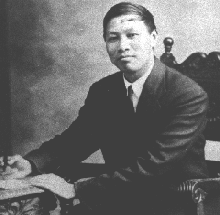
Watchman Nee
- Chinese preacher
- wrote
- The Normal Christian Life and many other books.
- NEO-ARISTOTELIANISM
-
- See Neo-Thomism
- NEO-FREUDIANISM
-
- "Religion is any system of thought and action shared by a group which gives the individual a frame of orientation and an object of devotion" (Fromm)
- Also see Freudianism
- NEO-KANTIAN
-
- An updated version of Kant's view
- NEO-ORTHODOXY
-
- Derived from the existentialism of Kierkegaard.
- Stresses the existential and psychological aspects of religion.
- Opposes biblical literalism, propositional revelation, natural theology, and all forms of religious humanism.
- "Scripture is only revelation when conjoined with God's Spirit in the present" (Brunner).
- Knowledge of God is not grasped by reason but through an act of God's personal self-disclosure (Word of God).
- Reasserts and reinterprets the role of sin in religious understanding and in the problems of the human situation.
- It says religion is man's striving to make himself righteous before that which he recognizes as ultimate and decisive (Barth).
- NEO-REALISM
-
- The objective world known is neutral, that is, it consists of mental and material entities and objective relations as well.
- NEO-SCHOLASTICISM
-
- See Neo-Thomism
- NEO-THOMISM
-
- also called Neo-Scholasticism.
- Restates the philosophy of religion of St. Thomas Aquinas.
- Religious knowledge is a product of reason completed by revelation.
- An independently real world is known by independently real minds.
- Stresses natural theology and theism.
- Teaches that God possesses all the qualities of perfection.
- The Bible as interpreted by the Church is authoritative.
- NESTORIANISM
-
- They said Jesus Christ was two persons in one body
- These two persons were morally in agreement in purpose and action.
- NEW ARISTOTELIANISM
-
- See Neo-Thomism
- NEW KANTIANISM
-
- See Neo-Kantianism
- NEW MATERIALISM
-
- The objective world known is material.
- Also see Materialism
- NEW REALISM
-
- The objective world known is neutral, that is, it consists of mental and material entities and objective relations as well.
- Newman, John Henry
- (1801-1890)
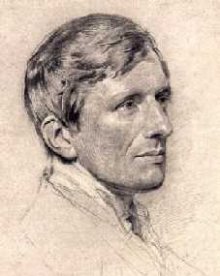
John Henry Newman
- Anglican pastor
- converted to Roman Catholic in 1845
- wrote hymn "Lead Kindly Light."
- Newton, Isaac
- (1642-1727)
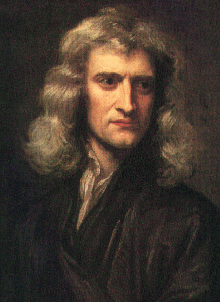
Isaac Newton
- Christian scientist loyal to the Bible
- wrote commentaries on the Bible, which he considered to be his greatest work
- known for his book Mathematical Principles of Natural Theology
- showed universal force called gravity
- time and gravity were absolute
- view was held until Einstein
- Newton, John
- (1725-1807)
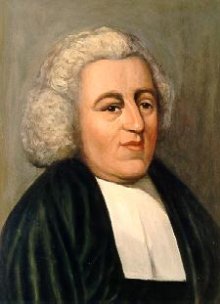
John Newton
- Anglican pastor
- former slave trader
- influenced Wilberforce against slavery
- wrote "Amazing Grace."
- Wrote autobiography: Out of the Depths.
- Nicholas of Cusa
- (1401-1464)
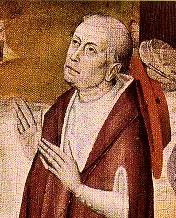
Nicholas of Cusa
- German philosopher and cardinal
- mystic
- advocated superiority of council over the pope
- tried to reunite Roman Catholic with Eastern Orthodox.
- Nicole, Roger
-
Roger Nicole
- Professor of theology at Gordon-Conwell Th. Sem.
- Wrote:
- Moyse Amyraut: A Bibliography
- editor of B. B. Warfield: A Bibliography
- Inerrancy and Common Sense
- Nicoll, William Robertson
- (1851-1923)
- Scottish Presbyterian pastor
- edited
- Expositor's Bible
- The Expositor's Greek New Testament
- Niebuhr, Helmut Richard
- (1894-1962)
- US theologian
- taught at Eden Seminary and Yale
- US version of neo-orthodoxy
- wrote
- The Meaning of Revelation
- The Social Sources of Denominationalism
- The Kingdom of God in America
- Christ and Culture
- Radical Monotheism and Western Culture
- younger brother of Reinhold.
- Niebuhr, Karl Paul Reinhold
- (1892-1970)
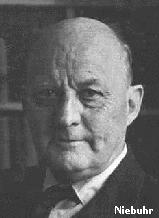
Reinhold Niebuhr
- US pastor
- older brother of Richard
- taught at Union (NY)
- taught ethics at Yale
- Neo-orthodox
- main area was ethics
- wrote
- Moral Man and Immoral Society
- Christian Realism and Political Problems
- The Nature and Destiny of Man
- Niemoller, Martin
- (1892-1967)
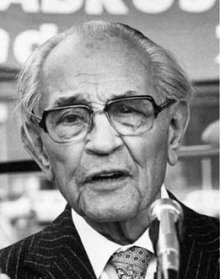
Martin Niemoller
- German protestant opposed Hitler
- imprisoned at Dachau
- member of World Council of Churches.
- Nietzsche, Friedrich
- (1844-1900)
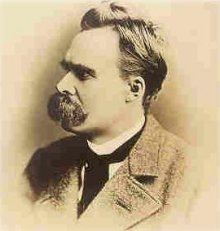
Friedrich Nietzsche
- German philosopher
- atheist
- early existentialist
- Hitler used his view of "superman."
- wrote
- The Birth of Tragedy
- Beyond Good and Evil
- The Genealogy of Morals
- Thus Spake Zarathustra
- The Will to Power
- Western man has been corrupted by two major evils: intellectualistic philosophy and the idealization of weakness by Christianity.
- Both deny the natural human spirit.
- A transvaluation or reversal of values is needed:
- instead of sympathy and pity -- contempt and aloofness
- instead of neighbor love -- egoism and ruthlessness
- Why? "Life is precisely Will to Power the fundamental fact of all history."
- But the transvaluation is for "free spirits" only, for the Superman.
- The everyday man is a "bridge," a something to be "surpassed."
- The new morality is "beyond good and evil," beyond the values of the "common herd," who sublimate their resentment of the naturally superior in the form of a conventional morality that makes the virtue of superiority "evil" and their own weakness "good."
- Altruism is a typical "slave" ideal.
- The new morality embodies the realization of the natural virtues of strength and power.
- "The noble type of man regards himself as a determiner of values."
- Noetus of Smyrna
- (c 220-c290)
- philosopher
- held monarchianism (stressing the unity of God) and patripassianism (Jesus was actually God the Father manifested in a different form thus the Father died on the cross in the person of the Son)
- God is substantially one, but nominally three.
- NOMINALISM
-
- The teaching that universals or general terms like "good" are merely names assigned to particular things which alone are real.
- Founded by Roscellinus
- See
- NON-COGNITIVIST ETHICS
-
- a Metaethical theory that denies that ethical terms are informative.
- Includes
- Emotivism
- Imperativism
- Prescriptivism
- Good Reasons Theories
- NON-COGNITIVE MEANING
-
- See Emotivism
- NON-COGNITIVE
-
- See Emotivism
- NON-CONTRADICTION, LAW OF
-
- No entity can be both what it is and not what it is with the same specification.
- NORMATIVE ETHICS
-
- an attempt to identify the universal principle(s) of morality to which all men ought to appeal to guide or to justify their behavior, i.e., an ideal or true code of morality.
- May be distinguished as teleological or deontological or varying combinations of both.
- NOUS
-
- Greek word for "mind" as used by Anaxagoras
- Used by counselors for "nouthetic counseling"
- Nyssa
-
- See Gregory of Nyssa