- WALDENSIANS
-
- a medieval Dissenting group founded by Peter Waldo
- began in S. France
- called Poor Men of Lyons
- Held simple communal lifestyle
- preached Bible in vernacular (not Latin)
- emphasized Sermon on the Mount
- encouraged lay preaching
- permitted women preachers
- denied purgatory
- Waldenstrom, Peter Paul
- (1838-1917)

Peter Waldenstrom
- Swedish Pietist theologian
- influenced Evangelical Covenant Church and the Evangelical Free Church
- held a form of the moral-influence theory of the atonement where the cross reconciles man to God rather than God to man
- Waldo, Peter
- (c 1150/7-1217)
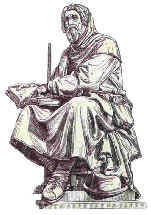
Peter Waldo
- wealthy French merchant of Lyons
- had a deep personal spiritual experience
- followers are called Waldensians or Waldenses
- emphasized simplicity, purity, and evangelism
- They rejected most of the seven sacraments and redefined the others.
- Rejected belief in purgatory, miracles, invocation of saints, fasts, and abstinences.
- Refused to take oaths.
- Walther, Carl F. W.
- (1811-1887)
Carl F. W. Walther
- US Lutheran
- organized Evangelical Lutheran Synod of Missouri
- President of Concordia
- Warburton, William
- (1698-1779)
- against Deism
- tried to demonstrate divine origin of the OT on basis of its lack of teaching on afterlife
- wrote
- The Divine Legation of Moses
- Principles of Natural and Revealed Religion.
- Ward, James
- (1843-1925)
- English professor at Cambridge
- wrote
- Naturalism and Agnosticism
- The Realm of Ends
- Philosophy of Spirit; spirit is ultimate reality but not same as Hegelian thought; man not only a purely physical being but also a spiritual one; all things (even inanimate things) have a kind of spiritual life of their own; emphasized on spirit as the agent of action, rather than merely thought; strong empirical emphasized
- Warfield, Benjamin Breckinridge
- (1851-1921)
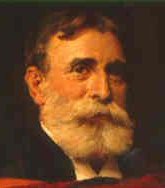
B. B. Warfield
- Professor at Princeton
- staunch defender of Calvinism, verbal inspiration, and inerrancy
- major opponent of Briggs and H. P. Smith
- wrote
- The Plan of Salvation
- Counterfeit Miracles
- Revelation and Inspiration
- Perfectionism
- Watson, John
- (1850-1907)
- Scottish Presbyterian pastored Liverpool church for 25 years
- pen name Ian Maclaren
- Webb, Clement Charles Julian
- (1865-1954)
- professor at Oxford
- wrote
- God and Personality
- Religious Thought in England
- theological Personal Idealist
- emphasized individual minds, not one great mind
- like H. Rashdall
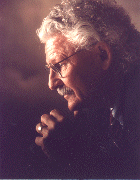
- Weber, Max
- (1864-1920)

Max Weber
- professor at Freiburg, Heidelberg, Munich
- wrote
- The Protestant Ethic and the Spirit of Capitalism
- saw social and economic link between Protestant Calvinism and successful capitalism
- Weiss, Johannes
- (1863-1914)
- German NT scholar
- wrote Earliest Christianity
- the message of Jesus was basically eschatological
- his book with Schweitzer's book marked end of liberal view of Jesus' life
- Wellhausen, Julius
- (1844-1918)
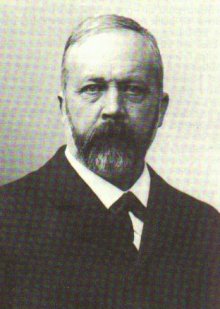
Julius Wellhausen
- popularized Documentary Hypothesis (JEDP)
- wrote History of Israel
- Welsh, John ("of Ayr")
- (1570-1622)
- Son-in-law of John Knox
- defied King James and was exiled and persecuted
- Welsh, John ("of Irongray")
- (1624-1681)
- itinerant preacher
- Grandson of John Welsh of Ayr
- charged with treason
- Wesley, Charles
- (1757-1834)
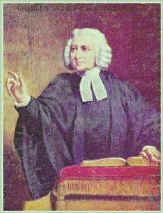
Charles Wesley
- Brother of John
- Methodist preacher
- wrote many hymns:
- "Christ the Lord is Risen Today"
- "Hark! The Herald Angels Sing"
- "Love Divine, All Loves Excelling"
- Wesley, John
- (1703-1791)
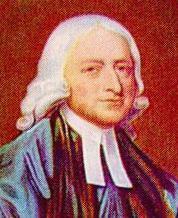
John Wesley
- with George Whitefield he founded Methodism
- saved after being a pastor in Anglican church
- member of "The Holy Club" at Oxford
- Arminian
- held Christian perfection view of total sanctification
- preached over 40,000 sermons
- Westcott, Brooke Foss
- (1825-1901)
Brooke Foss Westcott
- British NT professor at Cambridge
- bishop of Durham
- conservative yet interested in social issues
- edited Greek NT with Hort
- commentaries on NT
- White, John
- (1570-1615)
- British Puritan
- Calvinist
- against Catholics
- Whitefield, George
- (1714-1770)

George Whitefield
- Methodist evangelist
- successful in open-air preaching
- Calvinistic
- friend of Wesley
- instrumental in American Great Awakening revival
- preached over 18,000 sermons
- founded University of Pennsylvania
- Whitehead, Alfred North
- (1861-1947)
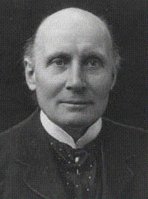
Alfred North Whitehead
- philosopher
- professor at Trinity College, Cambridge; London University; Harvard
- Realist metaphysics
- wrote
- Process and Reality
- Science and the Modern World
- Adventures in Ideas
- He combines elements of Platonism, realism, panpsychism, and relativity physics.
- Originally, he was a realist ("I am in the world; the world is not in me." 1925)
- He became more idealistic ("I am in the world, and the world is in me." 1933)
- Reality is pictured as a network or process of interrelated events comprising mutually sensitive fields which "prehend" each other and form "minds."
- When actualized, events are structured by the "eternal objects" or forms of existence.
- WHITGIFT
-
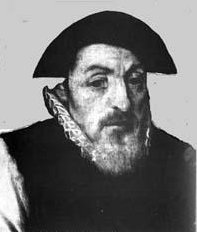
John Whitgift
- Archbiship who ordered the death of John Penry
- Whyte, Alexander
- (1837-1921)
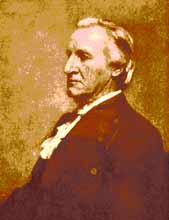
Alexander Whyte
- Free Church of Scotland preacher
- wrote Bible characters series
- Wilberforce, William
- (1759-1833)
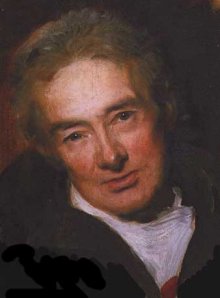
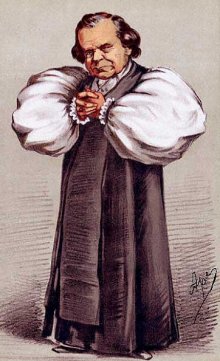
William Wilberforce
- Greatest British abolitionist
- member of Claphan sect
- served in Parliament
- helped found British and Foreign Bible Society and Church Missionary Society.
- Williams, Peter
- (1722-1796)
- Welsh Calvinist Methodist
- published Welsh Bible, commentary, and concordance
- expelled for exaggerated charges of heresy
- Williams, Roger
- (1607-1683)
Roger Williams
- Anglican became a Baptist preacher
- moved to New England
- founded Providence, Rhode Island
- started first Baptist Church in America.
- Williams, William
- (1717-1791)
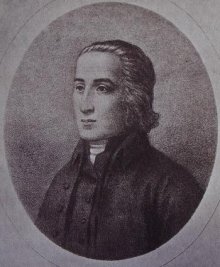
William Williams
- Welsh Methodist preacher
- wrote 90 books
- wrote "Guide Me, O Thou Great Jehovah"
- Willock, John
- (1512-1585)
- Knox's assistant
- pastored in London but had to flee
- Wilson, Robert Dick
- (1856-1930)
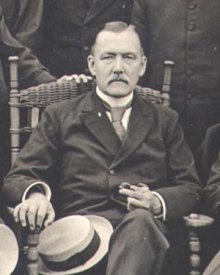
Robert Dick Wilson
- professor at Western Theological Seminary, Princeton, and Westminster
- notable philologist and OT scholar
- opposed higher criticism, defended authenticity of OT documents
- wrote
- Hebrew Grammar for Beginners
- Studies in the Book of Daniel
- Scientific Investigation of the Old Testament
- Wilson, Woodrow
-
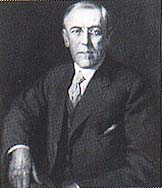
Woodrow Wilson
- President of Princeton from 1902-10
- Windelbrand, Wilhelm
- (1848-1915)
- professor at Zurich, Freiburg, Strasbourg, Heidelberg
- Neo-Kantian
- Wisdom, John
- (1904-1993)
- British analytical philosopher
- associated with Wittgenstein
- very colorful
- wrote
- Other Minds
- Philosophy and Psychoanalysis
- Paradox and Discovery
- Philosophy is conceptual therapy, but not just the emancipation of the puzzled philosopher from the "bewitchment" of language.
- "A purely linguistic treatment of philosophical conflicts is often inadequate."
- Philosophers puzzling over paradoxes have noticed something about the world that must be taken seriously.
- The issue is not merely one of a confusing or misleading use of language, since what is said that may appear to be absurd may also be calling attention to some feature of the world that has escaped attention or is obscured by linguistic habits.
- But "philosophical theories such as 'Matter (or Mind) does not exist' are paradoxes; and philosophical questions are not questions (scientific) nor problems (logic) but riddles."
- The philosopher's proposals concerning the nature of the world may be fruitful suggestions for showing us "not new things but old things anew."
- "A philosophical answer is really a verbal recommendation."
- As metaphysical statements, they are not (mere) nonsense (as the logical positivist hold), but significant "nonsense."
- "Wisdom places emphasis on seeing what is so, not saying what is so" (Newell).
- Although metaphysical statements are not factual statements per se they are not, as a consequence, of emotive value only; they help one to see facts in a new way.
- Also reasoning is not solely either empirical induction or deduction (i.e., logical demonstration), but in actual use is more nearly a referring to or comparing of particular cases.
- "Reasoning will not be effective until it leads to or comes from a new apprehension of the familiar."
- Wiseman, Nicholas Patrick Stephen
- (1802-1865)
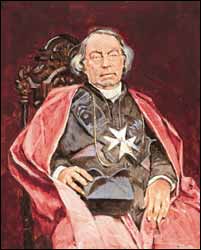
Nicholas Wiseman
- Roman Catholic prelate who helped to reestablish Roman Catholic in Britain
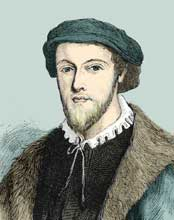
- Witherspoon, John
- (1723-1794)
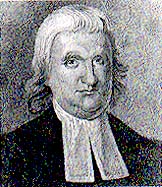
John Witherspoon
- US Presbyterian signed Declaration of Independence
- president of Princeton for 25 years
- Wittgenstein, Ludwig Josef Johann
- (1889-1951)
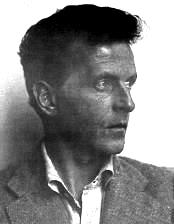
L. Wittgenstein
- Austrian
- professor at Cambridge University
- influenced logical positivism and linguistic analysis
- wrote
- Philosophical Investigations
- The Blue and Brown Books
- Philosophy of Language
- Tractatus Logico-Philosophicus
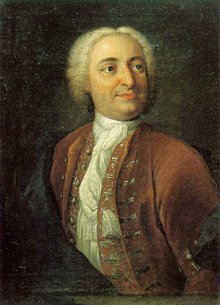
- Woodbridge, John D.
-
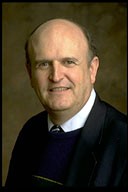
John D. Woodbridge
- Professor of church history at Trinity Evangelical Divinity School.
- Wrote Biblical Authority: a Critique of the Rogers and McKim Proposal.
- Co-author of
- Scripture and Truth
- The Gospel in America
- Woolman, John
- (1720-1772)
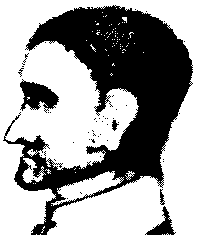
John Woolman
- US Quaker
- advocated abolition of slavery
- noted for his Journal
- mystic
- Woolston, Thomas
- (1669-1733)
- Deist who insisted that NT miracles were symbolic, not factual
- affirmed that Resurrection was not a hoax perpetuated by disciples
- wrote
- Six Discourses on the Miracles of Our Saviour.
- Wrede, William
- (1859-1906)
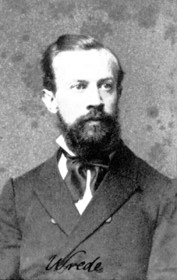
William Wrede
- German NT scholar
- Paul is the second founder of Christianity
- Paul changed the religion of Jesus in the areas of incarnation, atonement, and resurrection
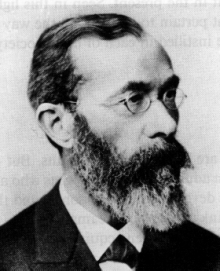
- Wycliffe, John
- (c 1330-1384)
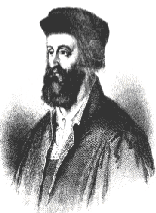
John Wycliffe
- British pre-reformer
- taught at Oxford University
- translated Vulgate into English
- criticized Roman Catholicism
- 44 years after his death, his body was exhumed and burned
- His followers are called Lollards